Which home robots really do chores in 2026?
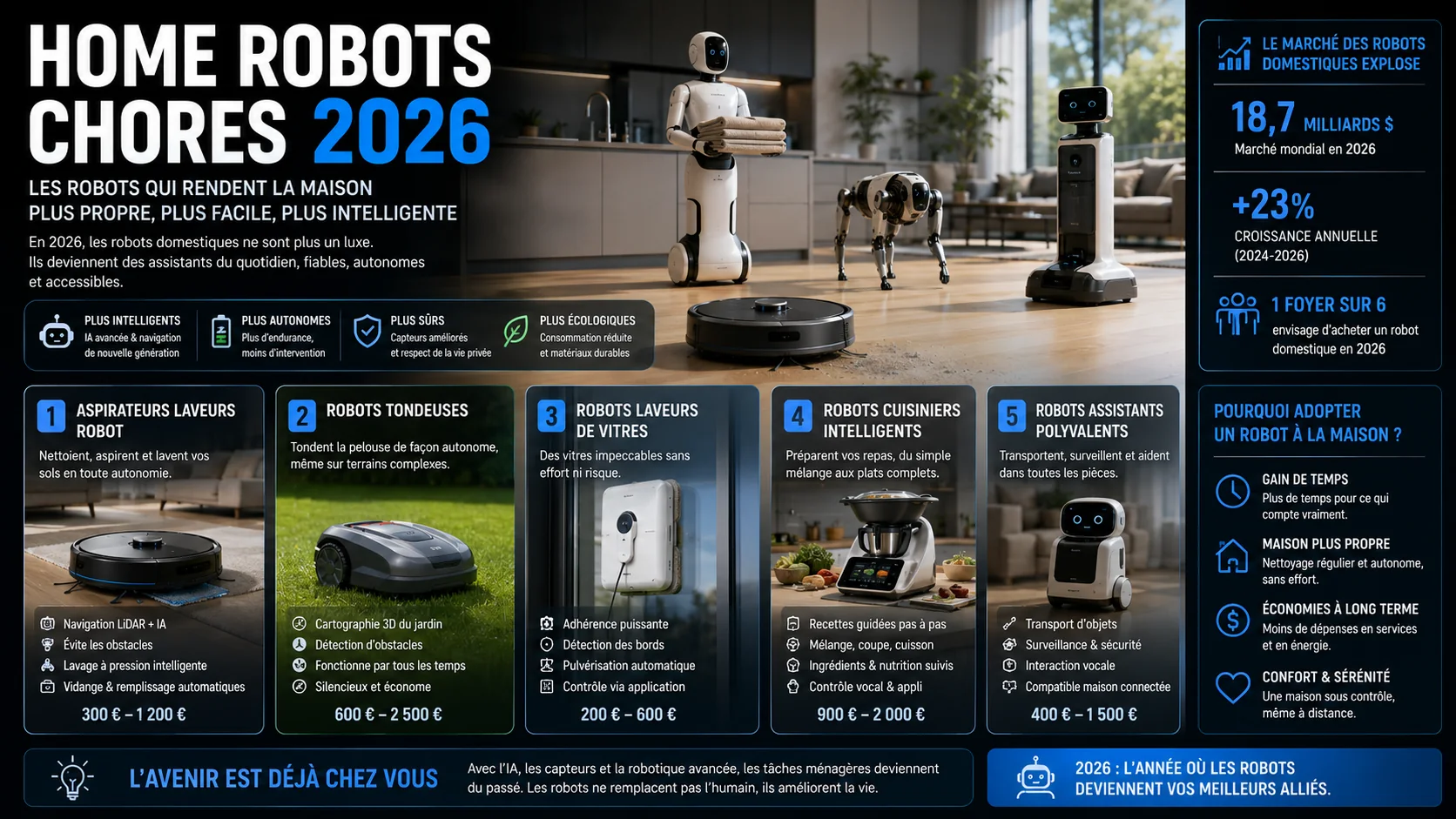
Among lifelike companions, the UBTECH UWORLD U1 Lite, Pro and Ultra show how far the category has moved.
The home robot that reliably does chores in 2026 is usually not humanoid. It is a machine designed around one environment: a robot vacuum, mower, pool cleaner or window cleaner. General-purpose helpers are progressing quickly, but most impressive dishwashing and tidying scenes are demonstrations or controlled early-access programmes.
That distinction matters because “can do a chore” can mean four different things: it performed once in a lab; it works in a prepared room; a remote human can rescue it; or a consumer product repeats the task safely every week. Only the last definition should guide a normal purchase.
What works now
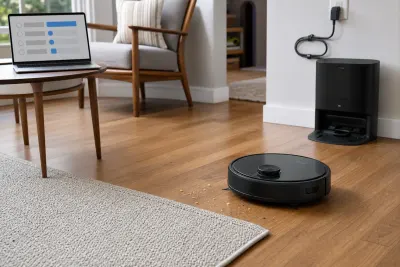
Robot vacuums and mops are the mature choice. Current models map rooms, schedule runs, avoid common obstacles and return to a dock. Premium docks can empty dust and wash mop pads. They still need help with cables, stairs, tight corners and occasional jams, but their value is measurable: repeated floor maintenance.
Robot lawn mowers can maintain a suitable garden within a defined boundary. Newer navigation systems reduce reliance on perimeter wires, but trees, slopes, pets, theft risk and local layout affect reliability.
Pool, window and grill cleaners handle even narrower surfaces. Narrow scope is a strength: the machine and its safety system are built around one predictable job. The International Federation of Robotics says domestic-task robots dominate consumer service-robot sales, while warning that its market figures are based on a supplier sample rather than the whole industry.
What humanoids can demonstrate
Figure's Helix 02 demonstration showed a Figure 03 completing a four-minute dishwasher sequence involving dozens of actions. A later demonstration showed two robots resetting a bedroom and making a bed. These are noteworthy because they combine walking, perception and manipulation over a sequence—not because they prove a robot can handle every kitchen.
Unknown homes introduce transparent glass, wet objects, clutter, pets, children, different cabinet hardware and unpredictable people. Figure's evidence is currently first-party. Until independent users report success rates and failure modes, treat it as an engineering milestone rather than a retail guarantee.
1X markets NEO directly for the home. Users can schedule chores and the robot is intended to become more capable over time. The company also clearly discloses “Expert Mode”: a remote human can guide NEO through an unknown task. That can make the service useful sooner, but it changes the product. Buyers need to ask when cameras transmit, who can access them, how long data is stored, and whether the robot remains useful without a connection.
The published early-access price—$20,000 to own, with a $499 monthly option announced for later—is another reminder that general-purpose home help is not yet mass-market. See our top humanoid robots for the wider comparison.
How to buy without believing the demo
Start with one chore and measure it. For floor cleaning, list surface types, thresholds, stairs, shedding pets and where a dock can fit. Check consumable prices, repair availability and whether core schedules work without a cloud subscription.
For any camera-equipped home robot, review the privacy policy and account security. Use a unique password and multi-factor authentication if available. Do not assume that “AI” means processing happens locally.
For an early-access humanoid, demand written answers: Which tasks are autonomous? When can a human operator see the feed? What is the failure rate? Who is liable for damage? What happens if the company ends the service? Avoid paying based on a release video alone.
The practical answer is simple. Buy a narrow robot if it already solves a repeated chore and the total cost makes sense. Watch humanoid home robots as an emerging service, not as a finished replacement for household labour. The same evidence test applies to Unitree's low-price headlines: capable hardware and a complete consumer service are not the same product.
If you want to learn programming rather than outsource cleaning, compare mBot2 and Bittle X. The Microduck dossier addresses a different path, an open robot for experimentation rather than evidence of autonomous household chores.
✔ How we checked this
We separate products available for a narrow chore from company demonstrations and announced early-access services. Teleoperation is identified whenever the manufacturer discloses it.
Sources
- World Robotics 2025 — Service Robots — International Federation of Robotics
- NEO home robot — 1X
- Helix 02 dishwasher demonstration — Figure
- Introducing Figure 03 — Figure