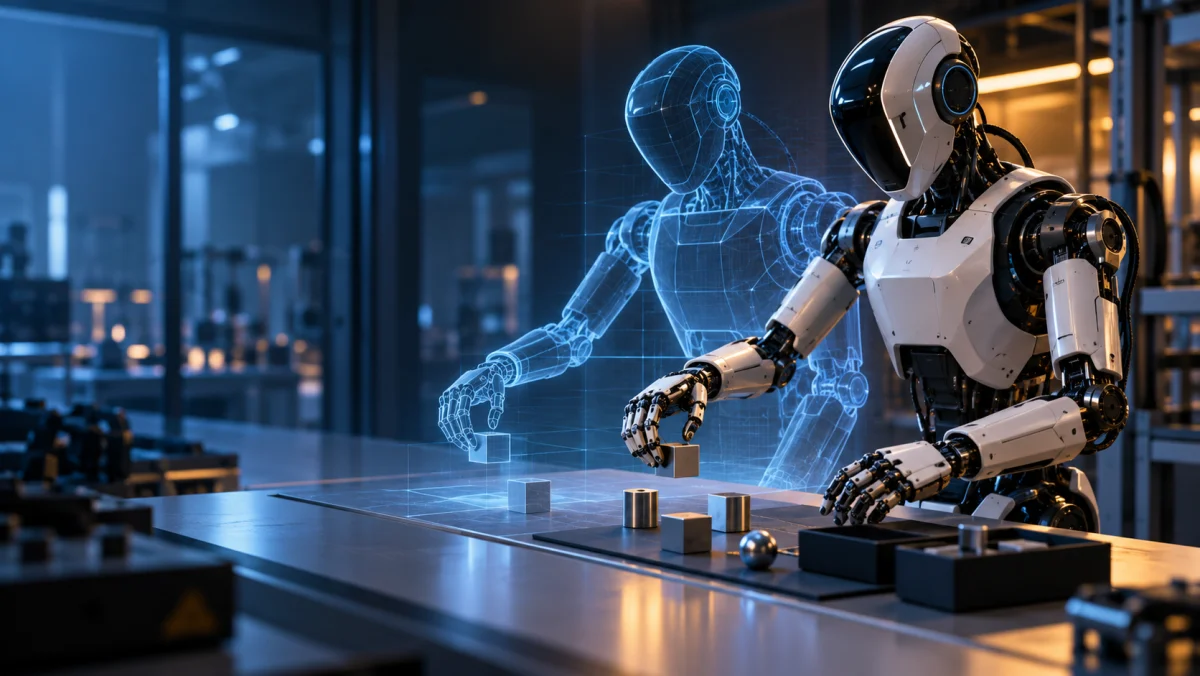
Top 5 humanoid robots in 2026: what they can really do
Beyond civilian platforms, future military robots follow a very different doctrine.
Humanoid robots stopped looking like isolated laboratory experiments in 2026. Several companies now describe production hardware, factory deployments or paid home access. That does not mean a general-purpose android is ready to replace a person. It means the comparison can finally use more than cinematic clips.
Our ranking rewards disclosed specifications, repeatable tasks, safety design and evidence outside a single edited demo. Price matters, but so does whether a buyer can actually order the machine.
1. Boston Dynamics Atlas: the industrial benchmark
The electric Atlas is the most convincing machine here for demanding industrial work. Boston Dynamics lists a 1.9-metre, 90-kilogram robot with 56 degrees of freedom, a four-hour battery and an IP67 rating. Its joints can rotate beyond a human range, which lets it move without imitating every human limitation. The company quotes a sustained 30-kilogram payload and says Atlas can swap its own battery.
The catch is access. Atlas is an enterprise platform, not a consumer product with a public checkout price. Initial 2026 deployments with Hyundai and Google DeepMind are useful signals, but customer results will matter more than specifications.
2. Figure 03 with Helix 02: strongest home-task evidence
Figure designed Figure 03 around household use and volume manufacturing. Its Helix 02 system coordinates vision, touch and proprioception across the full body. Figure has published long demonstrations of a dishwasher task and a two-robot bedroom reset. Those clips show coherent sequences, including object handling and navigation, rather than one impressive movement.
Still, these are company-produced demonstrations. They do not establish reliability across unfamiliar homes, children, pets or poor lighting. Figure therefore ranks highly for integrated autonomy, not for a proven consumer service.
3. Tesla Optimus: the biggest manufacturing bet
Tesla says Optimus is meant for unsafe, repetitive or boring work. Its advantage is less a published benchmark than Tesla's experience in batteries, actuators, AI training and large factories. In investor material, Tesla described Gen 3 as its mass-production design and targeted production before the end of 2026.
That schedule is a corporate plan, not a delivered result. Tesla publishes fewer current technical specifications than Boston Dynamics or Unitree, and there is still no independently tested retail Optimus. It belongs in the top five because its manufacturing attempt could change robot economics—not because every promised capability is available today.
4. Unitree G1: the accessible development platform
Unitree's G1 starts at $13,500 before tax and shipping. It is about 1.32 metres tall, weighs roughly 35 kilograms and combines a depth camera with 3D lidar. The base model has 23 degrees of freedom; higher configurations add more capable hands and computing.
G1 is relatively affordable for a humanoid research platform, but it is not a cheap household appliance. Buyers need to distinguish spectacular movement videos from supported autonomous tasks. Read our full G1 price check before comparing it with consumer electronics.
5. 1X NEO: the most concrete home proposition
NEO is the only entry framed as a paid home service with published early-access terms: 1X announced a $20,000 ownership option and a later $499 monthly plan. Users can schedule chores, while an “Expert Mode” allows remote human guidance when the robot encounters an unknown task.
That transparency is welcome. It also means NEO should not be described as fully autonomous. Remote assistance introduces privacy, connectivity and operating-cost questions. See our home robot reality check for what “does chores” means in practice.
The honest winner depends on the job
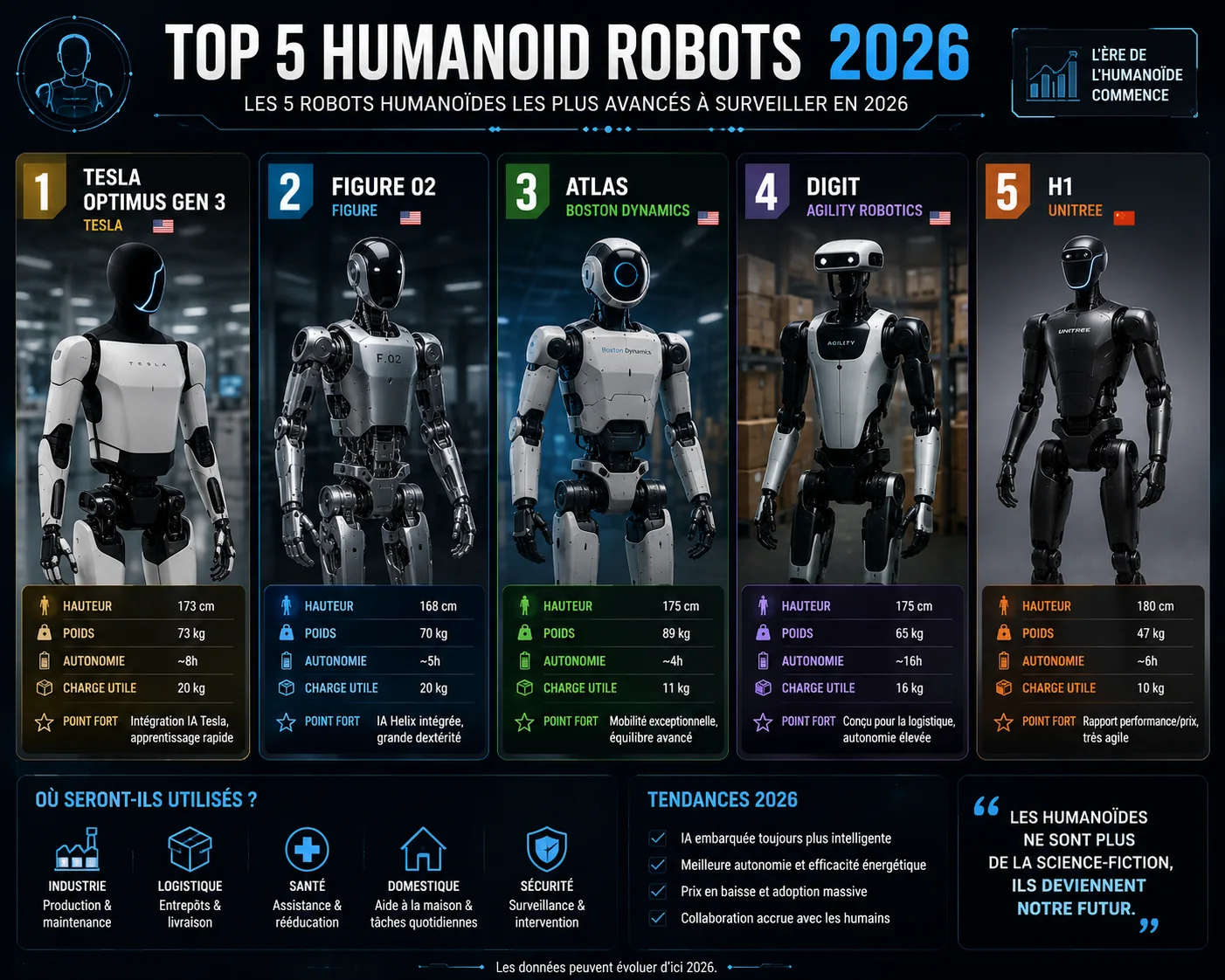
Atlas leads industrial hardware; Figure leads the current evidence for integrated household manipulation; Tesla is the manufacturing wildcard; G1 is the developer-friendly platform; and NEO offers the clearest home-service model. None is a universal domestic worker.
Before believing the next viral robot clip, ask three questions: Is the task continuous and uncut? Is a remote operator involved? Has anyone outside the manufacturer repeated it? That same method separates useful progress from theatre in our guide to the creepiest robots of 2026.
✔ How we checked this
We compared current manufacturer specifications and deployment announcements. A company demo counts as evidence of a demonstration, not proof of general autonomy.
Information verified as of the publication or update date shown. Technology moves fast — check the sources below.
Sources
- Atlas product specifications — Boston Dynamics
- Introducing Figure 03 — Figure
- Unitree G1 specifications — Unitree
- Tesla AI and Robotics — Tesla
- NEO home robot — 1X