Robot Vacuums in 2026: The Complete Guide Without the Marketing
The robot vacuum is the most mature home robot, but its specification sheet has become unreadable. Thousands of pascals, extending arms and a huge dock guarantee neither a clean rug nor an avoided cable. Start with your floor and your tolerance for maintenance.
1. Mapping comes first
Lidar maps quickly, works in darkness and plans regular passes. Camera navigation may recognise certain objects better, but depends more on light and raises privacy questions. The strongest systems combine sensors.
Check no-go zones, multi-floor maps, room cleaning and recharge-and-resume. An unstable app can waste excellent hardware.
2. Ignore the pascal contest
The maximum figure measures pressure under vendor-selected conditions. Pickup also depends on airflow, roller, sealing and software. Useful tests place equal debris on hard floor and carpet, then weigh what is recovered.
For hair, examine tangling around the roller and ease of removal. Rubber or split rollers can reduce maintenance, but no design is universal.
3. Mopping has three levels
A dragged cloth dampens the floor and removes light dust. Rotating or vibrating pads scrub harder. A continuously washed roller may contain dirt better, with more mechanisms to maintain.
The robot should lift or leave its mop before carpet. For a dried stain, an automatic pass may not replace manual cleaning. Never put an unauthorised detergent in the circuit.
4. Docks trade autonomy for maintenance
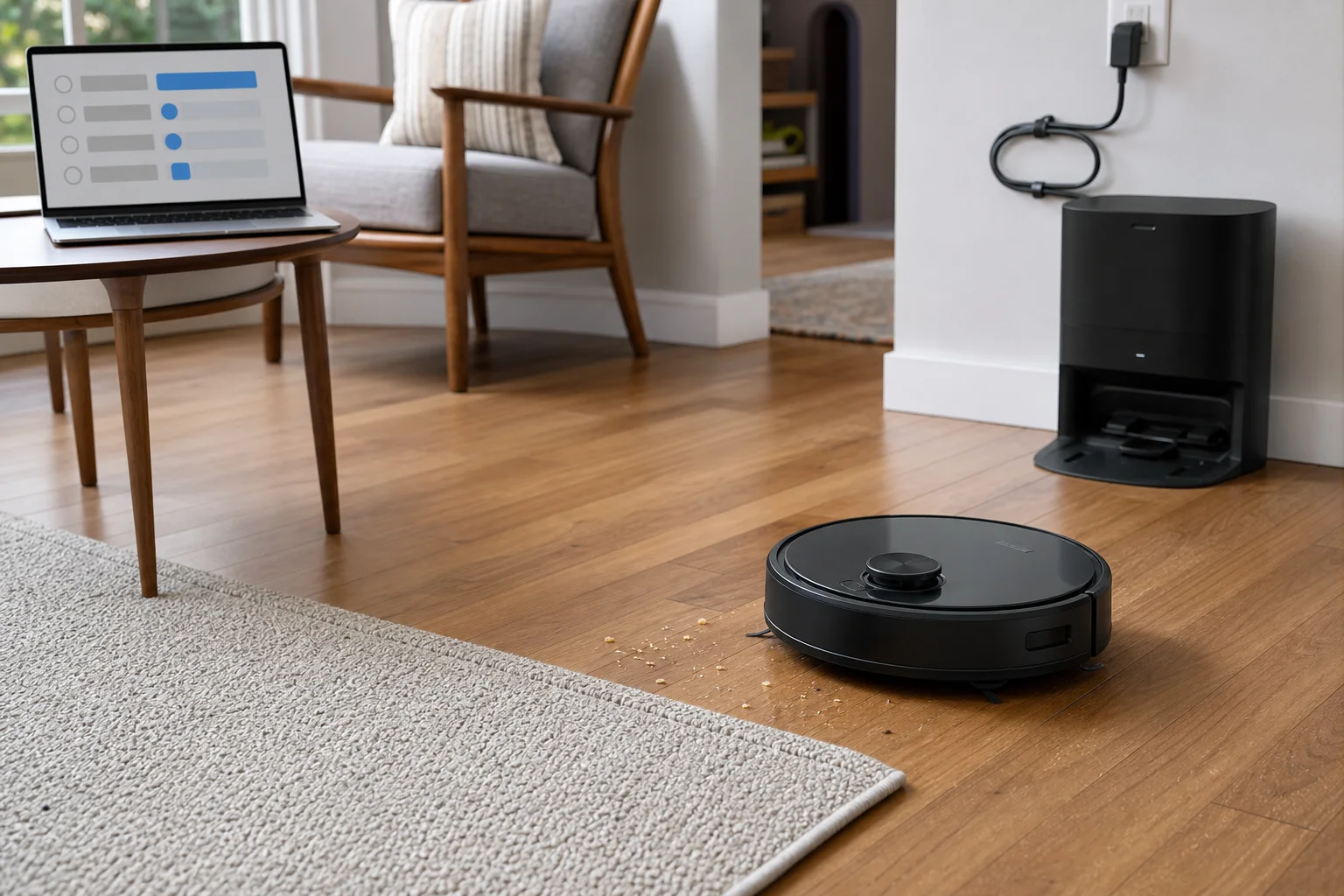
Auto-emptying reduces contact with dust. Full docks empty debris, refill water, wash pads and dry them. They use space, bags or consumables and collect residue in the tray.
Measure the location, lid clearance and outlet. Check bag, filter, brush and solution costs over two or three years. A dock does not remove maintenance; it consolidates it.
5. Obstacles, pets and safety
Avoidance tests should include a cable, sock, low toy and fake pet waste. Even good systems fail sometimes, so remove hazardous clutter before an unattended run. For pets, add a virtual barrier around bowls and choose local or disableable cameras if privacy matters.
Also check thresholds, chair bases, curtains and stairs. Total height with lidar determines whether it fits under furniture.
Three rational configurations
Small, mostly hard-floor home: reliable mapping, simple bin and good side brush. A huge dock is optional.
Carpet and pets: anti-tangle roller, measured carpet performance, auto-emptying and obstacle avoidance.
Frequently mopped hard floor: wash/dry dock, mop lift and an easily removable tray. Check overnight noise.
Before buying
Confirm parts availability, app-update support, map deletion or export and local warranty. Prefer reviews that show their protocol over pages that copy specifications. For a brand-new model, wait for measurements and reliability reports.
The best robot vacuum is not the one with the most features: it is the one that covers your floor, rarely gets stuck and receives the maintenance you are willing to perform. For other household machines, see what home robots can actually do.
★ Verdict · Best for: Choosing a configuration that fits the home
Prioritise reliable mapped navigation and a roller suited to your floors. Add a washing dock only if you will clean its tanks and tray.
✔ How we checked this
This guide does not claim hands-on RoboFutur testing: it synthesises independent test protocols, verifiable functions and maintenance costs.
Sources
- Robot vacuum reviews and test methodology — RTINGS.com
- Best robot vacuums tested — Tom's Guide
- Robot vacuum performance comparisons — Vacuum Wars