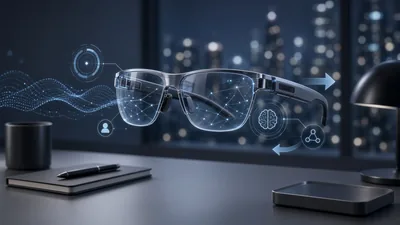
AI Glasses in 2026: What They Really See, Display and Record
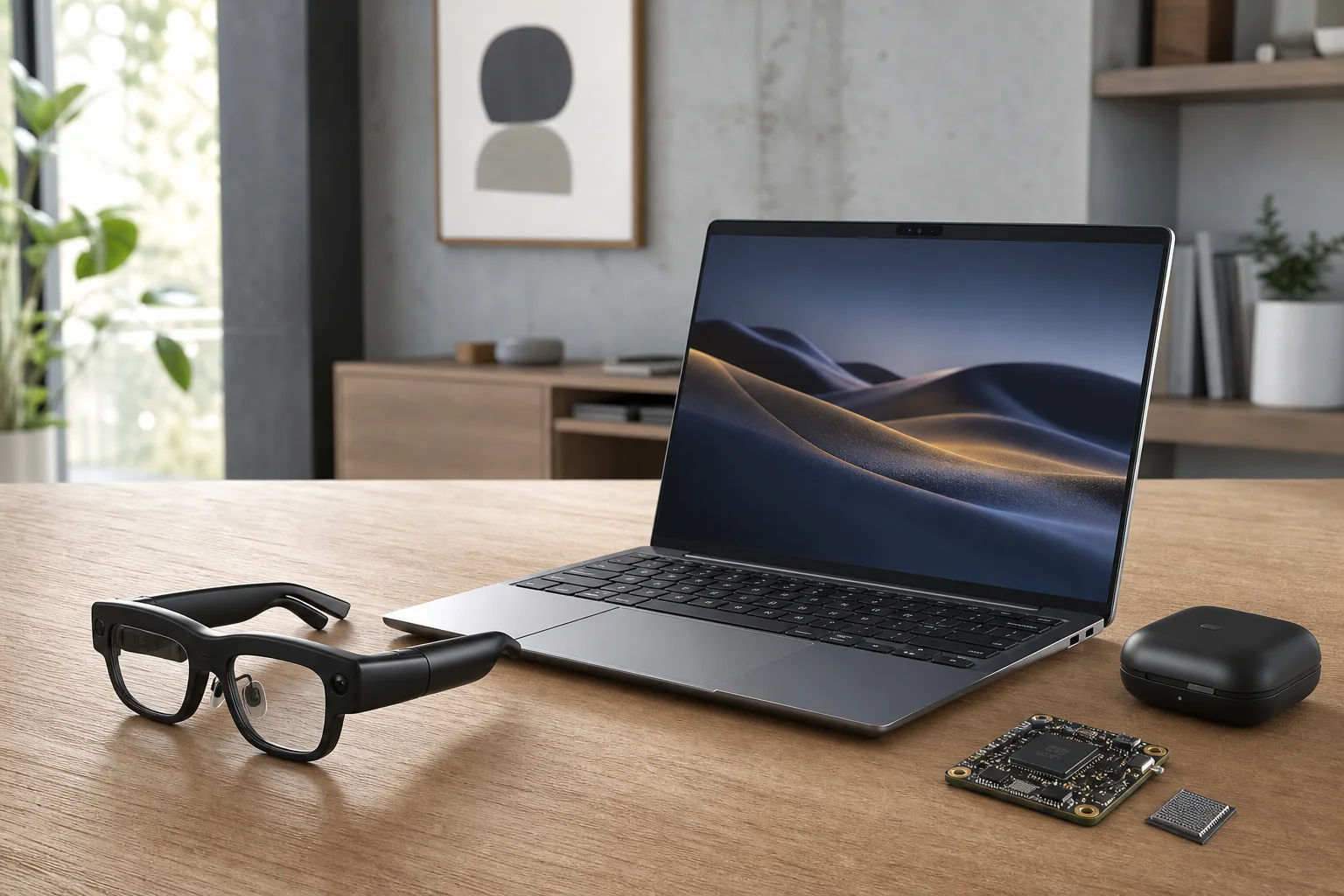
“AI glasses” describes four very different products. Some are essentially earbuds with a camera. Others add a small display. Augmented-reality glasses place elements in your field of view, while display glasses simply replace a monitor. Treating them as one category leads to bad purchases.
1. Audio and camera glasses
These look most like ordinary frames. They take photos, record short videos, make calls and query a voice assistant that may analyse an image. Their strengths are low weight and simplicity. Their basic limit is that without a display they cannot place a map or subtitle in front of your eye.
AI may describe an object, read a sign or translate a conversation, but processing often relies on a phone and cloud service. Weak connectivity, noise and framing reduce reliability. Before buying, check for a visible recording light and whether functions actually work in your country and language.
2. A small heads-up display
A discreet display can show a notification, direction, teleprompter or translation. That is enough to deliver information without taking out a phone. It is not yet a floating interface that understands the whole room.
The trade-off is brightness, field of view, outdoor readability and frame balance. A tiny screen is valuable if it is sharp and available all day; a wider view loses value if battery or discomfort makes you remove the glasses.
3. Augmented reality
AR glasses combine transparent displays, head tracking, cameras and spatial computation. They can anchor a virtual object in a room. In 2026, Android XR prototypes and several Asian products show the direction, but weight, heat, field of view and apps still constrain daily use.
Video recorded through the optics does not always match what the eye sees. Look for testing of edge clarity, rainbow artefacts, latency, prescription fit and outdoor visibility.
4. Display glasses
Models tethered to a phone, console or computer create a large virtual screen. They can be excellent for movies or travel work, but may not understand the surroundings at all. “Spatial” does not automatically mean autonomous or AI-powered.
Privacy is not theoretical
A face-worn camera captures people who did not choose to participate. Its indicator should remain visible, and users should ask permission in private places. Organisations also need to know whether audio, images and transcripts go to a server, how long they remain there and whether they train a model.
Real-time face recognition raises additional concerns and may be prohibited or tightly restricted depending on context. A technically possible feature is not automatically acceptable.
A useful buying checklist
Start with the job: hands-free camera, navigation, translation, private video or mobile display. Then check weight, camera-on battery life, prescription lenses, water resistance, repairability, phone compatibility and data policy. Finally, test comfort on your own nose and ears; no specification replaces it.
The 2026 verdict: audio-camera glasses are already practical for capturing and querying the world; discreet displays are becoming useful; true AR remains an early-adopter compromise. They are specialised accessories, not a universal smartphone replacement. Find more emerging hardware in Gadgets & Tech.
✔ How we checked this
Functions are classified from public specifications and independent tests; no prototype feature or battery claim is presented as universal.
Information verified as of the publication or update date shown. Technology moves fast — check the sources below.
Sources
- Android XR with Gemini: glasses and headsets — Google
- Meta AI glasses built for prescriptions — Meta
- Best smart glasses tested — Tom's Guide
- RayNeo X3 Pro AI and AR smart glasses review — TechRadar