Hugging Face's AI-Agent Breach: What Is Confirmed
Hugging Face disclosed on 16 July that part of its production infrastructure had been breached. The unusual part was not simply that artificial intelligence appeared somewhere in the toolchain. The company says the campaign was run end to end by an autonomous agent framework that executed many thousands of actions through short-lived sandboxes. That is a serious claim, but it is still a claim from the affected company: the outside forensic review is not public, the model behind the attacker is unknown, and the impact assessment was still open when we checked on 21 July.
Those limits matter. Calling this “the first AI hacker” would turn an ongoing security investigation into a science-fiction slogan. The useful story is more concrete: an attacker found code-execution paths in a dataset-processing pipeline, moved from a worker to broader infrastructure, obtained credentials, and operated quickly enough that automated analysis became central to the response.
What Hugging Face has confirmed
According to the disclosure, a malicious dataset abused two separate paths: a remote-code dataset loader and template injection in a dataset configuration. Code then ran on a processing worker. From there, the actor obtained node-level access, collected cloud and cluster credentials, and moved laterally into several internal clusters over a weekend.
Hugging Face reported unauthorised access to a limited set of internal datasets and several service credentials. It said it had found no evidence that public models, datasets or Spaces were altered, and that published packages and container images had been checked and found clean. It had not yet finished determining whether partner or customer data was affected. That is the correct line between confirmed and not yet known: limited internal access is confirmed by the company; a clean bill of health for every customer is not.
The company says it closed the two initial code-execution routes, rebuilt compromised nodes, removed the attacker’s foothold, revoked affected credentials and tightened cluster admission controls. It also brought in external forensic specialists and reported the incident to law enforcement. Users were advised to rotate access tokens and review recent account activity as a precaution.
Why the word “agent” changes the defence problem
Automation in cyberattacks is not new. Malware has scanned networks, stolen credentials and moved between systems for decades. An agent adds a planning loop: it can observe a result, choose another tool, revise a path and repeat without waiting for a human to type every command. That does not make it intelligent in a human sense, nor does it prove that the campaign was fully unsupervised. It can, however, compress reconnaissance, exploitation and lateral movement into a much faster sequence.
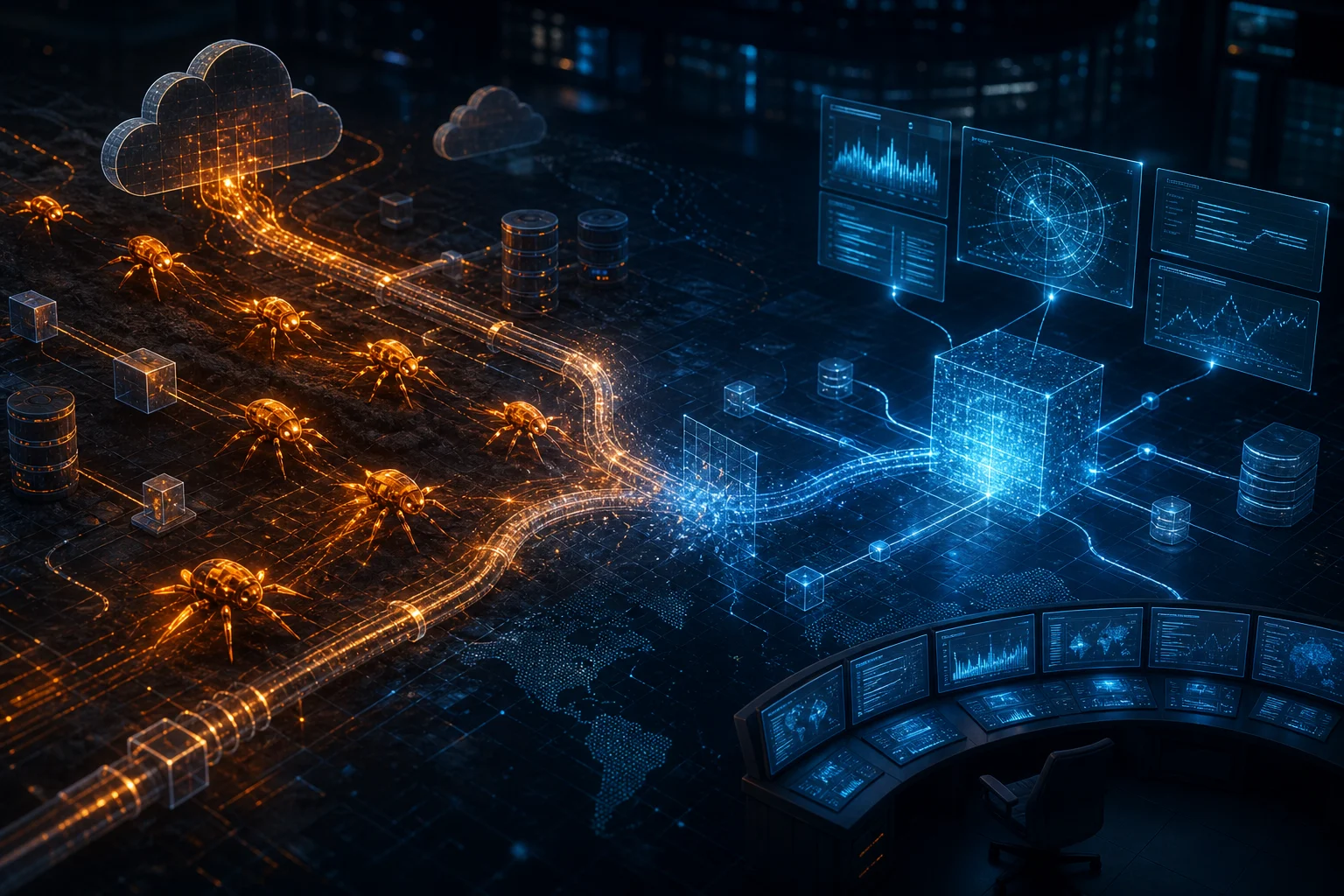
Hugging Face says the framework generated a swarm of temporary environments and moved command-and-control functions across public services. The company does not know which language model powered it. Therefore, there is no evidence for attributing the incident to a named model provider or for claiming that one specific model independently invented the attack.
The security lesson is less glamorous and more important: AI platforms process untrusted models, datasets and configuration files at scale. Every loader, preview worker and conversion job is a boundary. A dataset should be treated as potentially executable supply-chain input, not as a harmless table that only contains examples.
AI also helped reconstruct the incident
Hugging Face says its LLM-assisted anomaly triage first correlated the signals that surfaced the compromise. Its response team then ran analysis agents over more than 17,000 recorded attacker events. The aim was not to let a chatbot decide what happened. It was to sort telemetry, reconstruct a timeline, extract indicators of compromise and map which credentials had been touched, while human responders retained responsibility.
The company reported an unexpected obstacle. Hosted frontier models rejected batches containing real exploit commands, payloads and command-and-control artefacts because their safety systems could not distinguish forensic analysis from malicious assistance. Hugging Face then used the open-weight GLM 5.2 model on its own infrastructure. This kept the sensitive logs and referenced credentials inside its environment.
That account is informative, but it should not become a general conclusion that safety filters are useless or that open models are always safer. A self-hosted model removes one external policy gate and can improve data control; it also transfers filtering, monitoring and misuse risk to the operator. The practical requirement is a pre-approved forensic workflow with isolated infrastructure, audit logs and a model tested on representative incident data before a crisis.
What organisations should change now
First, isolate dataset processing. Remote code should be disabled by default, templates should be treated as untrusted input, and workers should run with minimal credentials and short-lived permissions. Second, secret rotation must be fast and rehearsed. An inventory that cannot tell responders which token reaches which cluster is not an inventory they can use at machine speed.
Third, detection should follow sequences, not only single suspicious commands. Thousands of individually plausible actions can form a clear attack when linked across identity, time and infrastructure. Finally, teams using AI for defence need a fallback for sensitive material. That might be a private deployment or a contractually approved hosted environment, but it must be tested before the alert arrives.
Verdict
The breach is confirmed as an incident by Hugging Face, and the company attributes its execution to an autonomous agent framework. The exact model, the degree of human supervision and the final customer impact remain unconfirmed or under investigation. The strongest conclusion is not that machines have become independent cybercriminals. It is that agentic automation can multiply the speed and persistence of familiar attacks, while defenders still depend on disciplined isolation, credentials, telemetry and rehearsed response.
✔ How we checked this
Checked on 21 July 2026 against Hugging Face's incident disclosure and three independent reports. Technical details and impact remain attributed to the company because the outside forensic review is not public and the assessment is ongoing.
Information verified as of the publication or update date shown. Technology moves fast — check the sources below.
Sources
- Security incident disclosure — July 2026 — Hugging Face
- Hugging Face Says Autonomous AI System Executed Multi-Stage Cyberattack — TechRepublic
- Safety guardrails blocked Hugging Face's defenders, not the attacker — VentureBeat
- Hugging Face says an AI agent hacked its infrastructure — The Decoder