The first humanoid IPO just revealed which business model actually works
For a decade, the humanoid robot industry has been valued on video. Demos, funding rounds, and promises about factory work in some near future. On August 19, 2026, that changed in a way no keynote could: Unitree Robotics listed on Shanghai's STAR Market, and a humanoid maker had to open its books.
The share price did what Chinese tech listings do — priced at 150.80 yuan, opened at 1,100, closed at 845, up 460% on day one, with retail demand oversubscribed more than 8,000 times and about 6.1 billion yuan (roughly $905 million) raised. That part is a story about appetite, not about robots; the average first-day pop for Chinese listings in 2026 already runs near 279%.
The prospectus is the interesting document.
The numbers nobody else in this industry has published
Unitree reported 1.708 billion yuan in 2025 revenue (about $248 million), up 335% year on year, and 600 million yuan in net profit excluding non-recurring items (about $87 million), on a gross margin of 60.27%. It shipped more than 5,500 humanoid robots in 2025 — more than any other company in the world.
The mix shift matters more than the totals. Humanoids were 1.9% of Unitree's revenue in 2023. They were over 51% across the first three quarters of 2025. A company that made its name on robot dogs became a humanoid company in under two years, and did it profitably.
What this says about the Western story
Set that against the industry's dominant narrative. Tesla has torn down a car line at Fremont for Optimus and promises public sale in 2027. Figure has passed 1,000 units of Figure 03 and runs logistics pilots at BMW. Both are serious programs. Neither publishes separate humanoid financials, because neither has to.
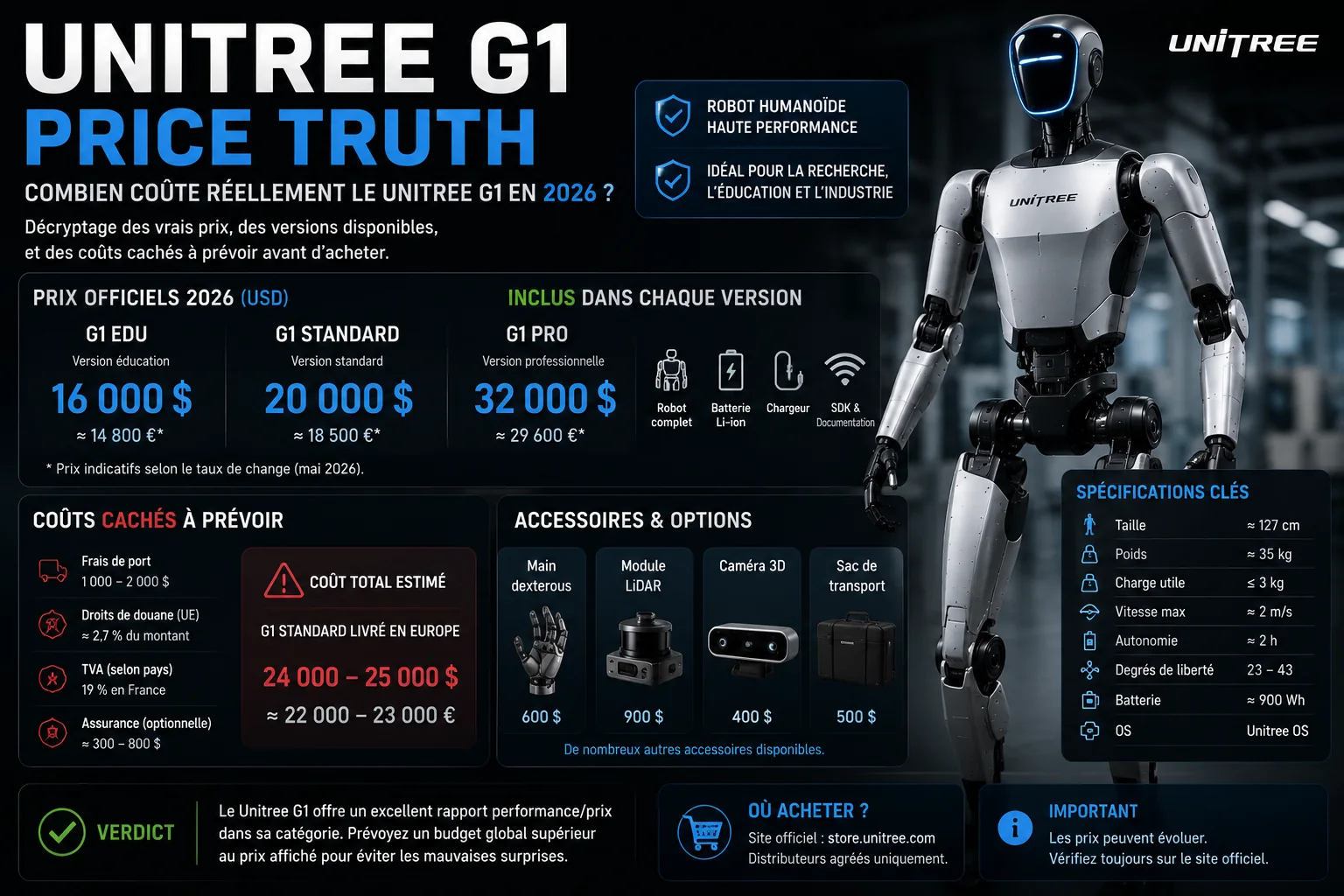
So the only humanoid maker with audited, public accounts is also the one shipping the most units — and it got there by selling machines in the tens of thousands of dollars to laboratories, universities, integrators and companies, not by replacing factory workers.
That is the finding. The first business model to demonstrably work in humanoid robotics is not general-purpose labor. It is the research, development and demonstration platform, sold in volume, at a price point that does not require the robot to be autonomous enough to do a job.
Three cautions worth holding
The valuation is not the achievement. At 845 yuan, the stock prices in years of growth that have not happened. Day-one pops in this market say as much about scarcity of supply as about company quality.
Guidance is not results. Unitree projects first-half 2026 revenue of 1.052–1.128 billion yuan and net profit of 258–306 million yuan. Those are company estimates. The genuine value of a listing is that they become checkable — in a few months, against filings.
Profitable at this scale does not mean the hard problem is solved. Selling 5,500 capable platforms is a different business from deploying robots that reliably do useful work unattended. Unitree has proven the first. Nobody has yet published evidence for the second.
Why it still marks a turn
Public markets impose a discipline that private rounds do not. From now on, at least one humanoid manufacturer must report revenue, margin and shipments on a schedule, and be wrong in public when it misses. In a sector where "what is confirmed" and "what is claimed" have been routinely blurred, that single fact does more for clarity than any demonstration video released this year.
For buyers, nothing changes this week: no price cut, no European distributor, no local support was announced alongside the listing. What changed is that the industry now has one set of real numbers to be measured against — including by its better-funded Western rivals.
✔ How we checked this
Proof level: CONFIRMED. Listing figures come from the Shanghai Stock Exchange and were cross-checked against CNBC, SCMP and NBC News reporting of the August 19, 2026 debut. Financials are as filed in Unitree's IPO prospectus; the H1 2026 range is company guidance, labelled as such. Facts checked on August 24, 2026.
Information verified as of the publication or update date shown. Technology moves fast — check the sources below.
Sources
- Unitree Robotics IPO pricing on the STAR Market — Shanghai Stock Exchange
- China's backflipping robot maker Unitree pops in Shanghai debut — CNBC
- Unitree Robotics surges 629% in Shanghai share debut — South China Morning Post