AEON’s Humanoid Gym: training for a 1,000-robot plan
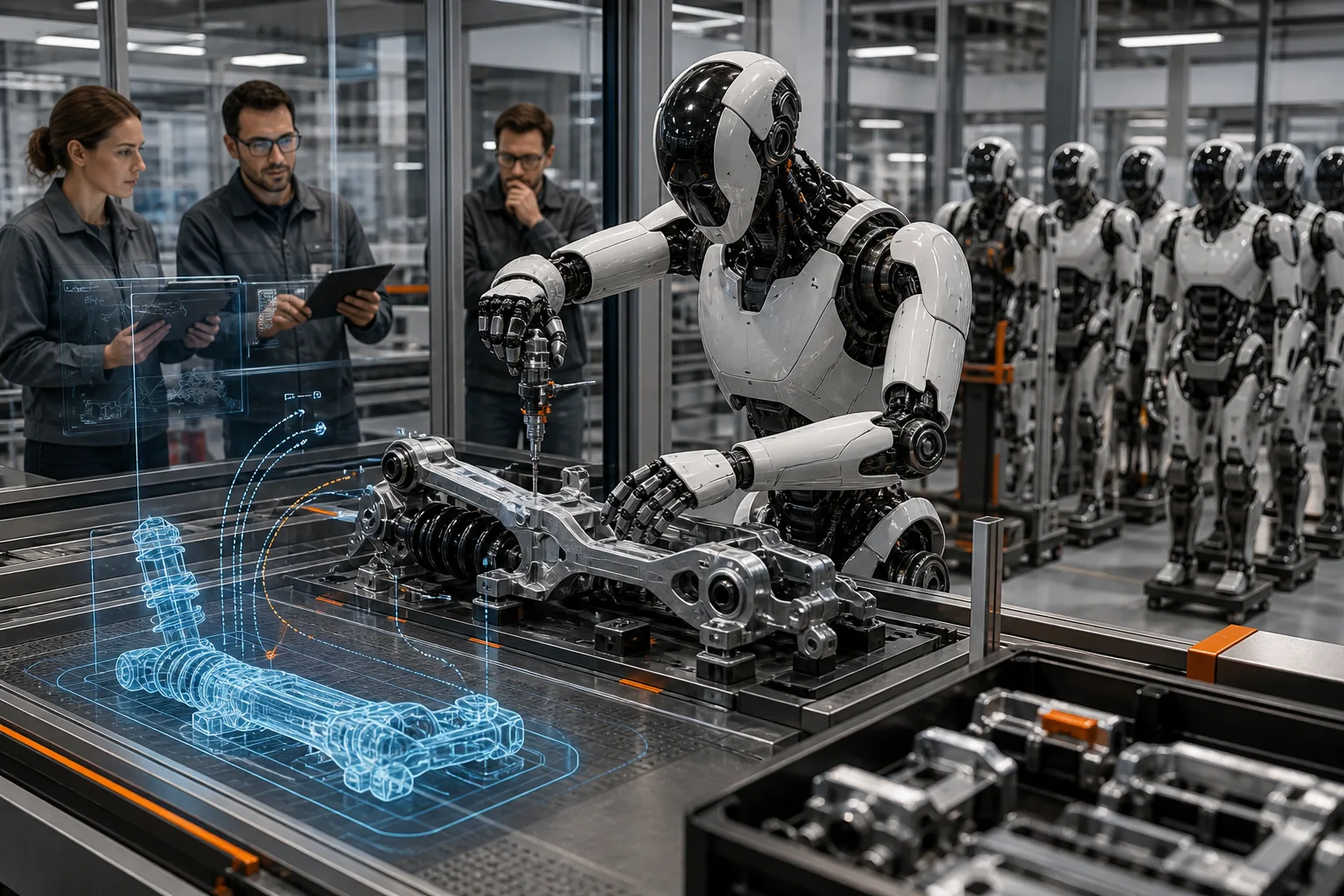
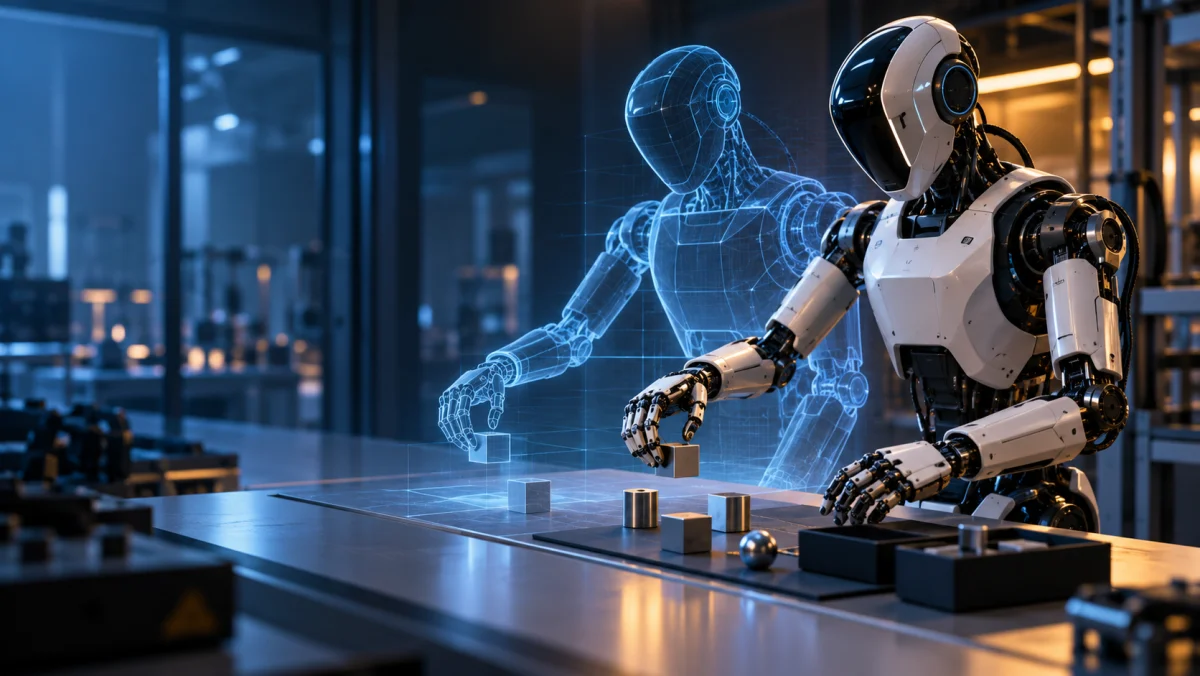
The figure of 1,000 humanoids attracts attention. The training system that comes before deployment matters more. On August 19, 2026, Hexagon announced that its AEON robot was entering Schaeffler’s Humanoid Gym in Germany. The goal is to learn, repeat and validate manufacturing tasks before a planned deployment of at least 1,000 units across the supplier’s global network.
This is one of the sector’s more substantial industrial commitments. It does not mean that one thousand robots are operational today. The April agreement targets a seven-year ramp to 2032, following a joint pilot in 2025. Multiple representative use cases are due to be explored over the next six months.
What is contracted and what remains a target
Hexagon and Schaeffler say they intend to deploy at least 1,000 AEON units in the group’s plants. Schaeffler is also supplying actuator components to Hexagon, creating both a customer and industrial partnership.
The announcements separate pilot, training, validation and deployment. That distinction is essential. The commitment is a multi-year plan, not a current inventory of one thousand machines or proof of fleet productivity at that scale.
| Stage | Public status on August 24, 2026 | Evidence still needed |
|---|---|---|
| Joint pilot | Completed in 2025, companies say | Detailed pilot metrics |
| Humanoid Gym | AEON entry announced August 19 | Task-level success rates |
| Use cases | Multiple planned over six months | Protocols, cycles and recovery |
| Deployment | At least 1,000 over seven years | Active units, uptime and cost |
Why build a gym for humanoids?
A live factory is a poor place for trial-and-error learning. The Gym reproduces representative equipment, tasks and constraints in a controlled space. Operators can demonstrate an action; the robot imitates it, repeats it and teams measure deviations before approving transfer.
Hexagon describes a train–validate–deploy loop. Imitation learning can accelerate initial skill acquisition, while repetition exposes weaknesses: a part in a different pose, partial visibility, misjudged contact or an interrupted sequence.
That directly addresses limits seen at the World Humanoid Robot Games. A robot can run quickly and still fail when a cable changes angle. Industrial training must therefore include variation and recovery, not only the nominal movement.
Metrics that will show whether it works
An announced volume is not enough. AEON should ultimately be measured on:
- unaided success rate for each task;
- median cycle time, not only the best attempt;
- autonomous recoveries after an error;
- mean time before human intervention;
- mechanical and software availability across a full shift;
- integration, maintenance and supervision cost;
- safety incidents and precautionary stops.
A ten-minute demonstration can conceal a reset between grasps. Multi-shift production cannot. Our humanoid proof checklist therefore separates a demonstrated task, a customer pilot and a sustained deployment.
Why Schaeffler’s scale is strategically useful
A global factory network contains more variation than a laboratory: parts, lighting, layouts, speeds and local rules. If Gym-trained skills transfer with little adjustment, AEON gains a major advantage. If every station requires a heavy custom integration, programme economics change.
The partner’s size can also standardise workstations and pool data. That may matter more than humanoid form itself. Return on investment depends on reusing a skill between sites, not on the number of robots lined up for a photograph.
The path to 2032 provides time to improve hardware, hands and supervision requirements. It also leaves specialised robots, mobile manipulators and conventional automation free to remain more efficient on selected tasks.
A contract does not yet make AEON a general-purpose product
Company announcements are valuable primary sources for the agreement, but they naturally present the partners’ strategy. They do not yet provide independent results, incident logs, cost per task or comparisons with non-humanoid alternatives.
The accurate wording is therefore: a deployment of at least 1,000 robots is planned, after training and validation. It is not: “1,000 humanoids are already working at Schaeffler.”
Unitree’s Shanghai IPO and this programme illustrate two scale-up mechanisms: funding a manufacturer’s production and anchoring a robot inside a major customer network. Both face the same ultimate question: how many useful hours, with how many interventions and at what full cost?
Our assessment
The Humanoid Gym is more credible than an immediate mass rollout. It recognises that hardware alone does not make a humanoid productive: deployment needs a training environment, acceptance criteria and a feedback loop from the factory.
If Hexagon and Schaeffler publish task metrics, fleet milestones and failure cases, the programme could become an industry reference. Until then, the thousand robots are a contractual trajectory. The Gym is where the promise will actually be tested.
✔ How we checked this
Checked on August 24, 2026 against Hexagon’s official April 22 and August 19 announcements. Timelines, volumes and benefits are company commitments or targets; no performance data for a 1,000-unit fleet has been published.
Information verified as of the publication or update date shown. Technology moves fast — check the sources below.