Robotaxis in 2026: Where Waymo, Zoox and Tesla Actually Operate
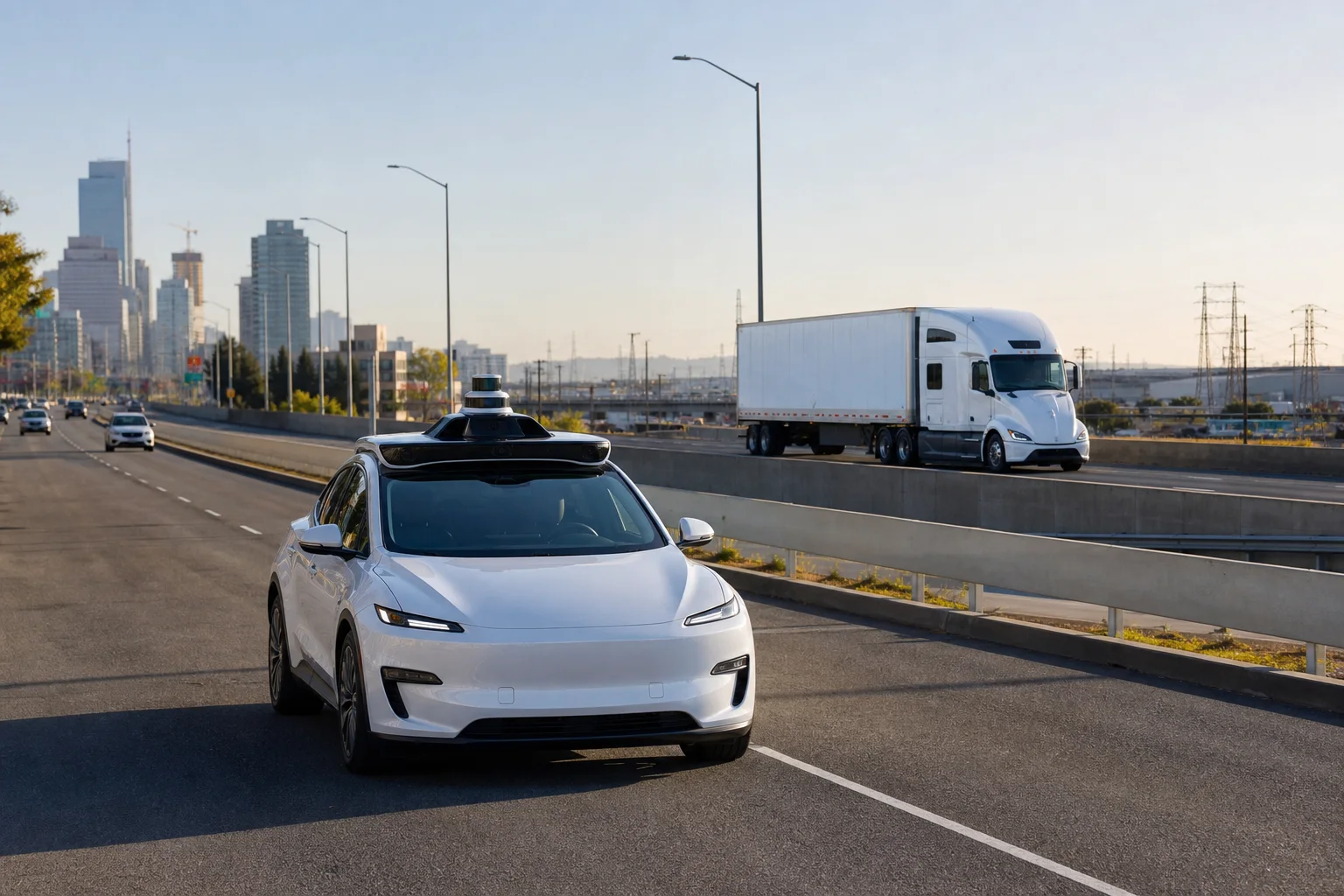
Robotaxis are no longer only demonstrations. In some US zones, a customer can request a car that completes the ride without a human driver. But that sentence does not describe every city, every road or every system sold to consumers.
Level 2 is not Level 4
NHTSA uses a scale from 0 to 5. At Levels 0 to 2 the driver remains responsible and must supervise. Level 3 may drive under defined conditions but asks for takeover. Level 4 performs the whole driving task inside its operational domain without relying on human takeover; Level 5 would cover every road and condition a person can handle.
Commercial robotaxis are mainly Level 4 systems limited by geography, weather and operating rules. Driver assistance on a personal car is not a robotaxi.
Waymo: the largest commercial footprint
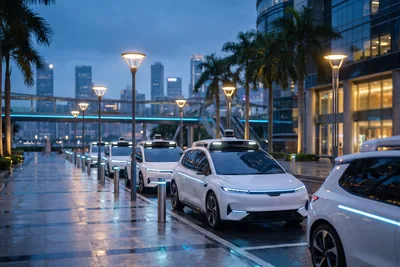
Waymo has expanded service across several metro areas. In February 2026 it announced public access in Dallas, Houston, San Antonio and Orlando, taking its commercial service to ten metro areas according to the company. It attributes millions of rides and a substantial reduction in serious crashes versus comparable human driving to its fleet.
Those statistics are useful but need their method: mileage, geography, severity definition, time period and comparison group. The regulator also warns that automated-system incident reports have limitations and do not support a raw ranking between companies.
Update 14–17 September 2026: Las Vegas
According to TechCrunch (14 September 2026), Waymo began inviting the public into robotaxis in Las Vegas, described as its 15th US market. The initial fleet is counted in “dozens” of Ojai minivans (Zeekr base) over a zone of about 24 miles that includes part of the Strip south of highway 589 and Boulder Junction. Access is rolling invites, as in Denver, San Diego and Tampa around 1 September according to the same coverage.
TechCrunch also reports Nevada authorizations of up to 1,000 Waymo vehicles, 5,000 Tesla vehicles and 1,000 Uber/partner vehicles over a year. As of 14 September Tesla still had no commercial Vegas service despite the permit. Zoox (Amazon) is described as already running paid rides earlier in September.
Tesla Cybercab without steering wheel or pedals opened paid rides in Austin on 3–4 September 2026 according to Road to Autonomy and Motley Fool (15 September). Motley Fool says NHTSA is reviewing safety and compliance for those vehicles.
Zoox: a vehicle designed without a driver
Zoox is developing a symmetrical vehicle without a conventional steering wheel instead of modifying a standard car. In 2026 it expanded passenger rides, including in San Francisco, still inside a defined geography and operating model.
Tesla: follow the network city by city
Tesla presents Robotaxi service in several Texas cities on its official page. That service must be separated from driver-assistance features sold to owners. For each city, check who is in the driver's seat, whether an onboard monitor is present, the zone and whether public access is open.
Edge cases remain the real test
Temporary construction, traffic officers, emergency vehicles, heavy rain, dropped objects and unpredictable road users are difficult because they combine perception with social judgement.
The 2026 verdict: commercial Level 4 exists and is expanding, mainly as a geofenced service. Universal autonomy sold to every driver remains another step. See autonomous trucks and Bolt × Lucid.
✔ How we checked this
Service zones come from operators and driving levels from the regulator. 17 September 2026 update: Waymo Las Vegas as reported by TechCrunch on 14 September 2026.
Information verified as of the publication or update date shown. Technology moves fast — check the sources below.
Sources
- Automated Vehicles for Safety — NHTSA
- Waymo opens service in Dallas, Houston, San Antonio and Orlando — Waymo
- Waymo opens robotaxi service in Las Vegas — TechCrunch
- Robotaxi cities 2026 — RoboTaxi Report
- Where Tesla’s robotaxi rollout stands today — Motley Fool
- Zoox opens rider service in San Francisco — Zoox
- Tesla Robotaxi — Tesla
- NHTSA crash reporting for automated systems — NHTSA