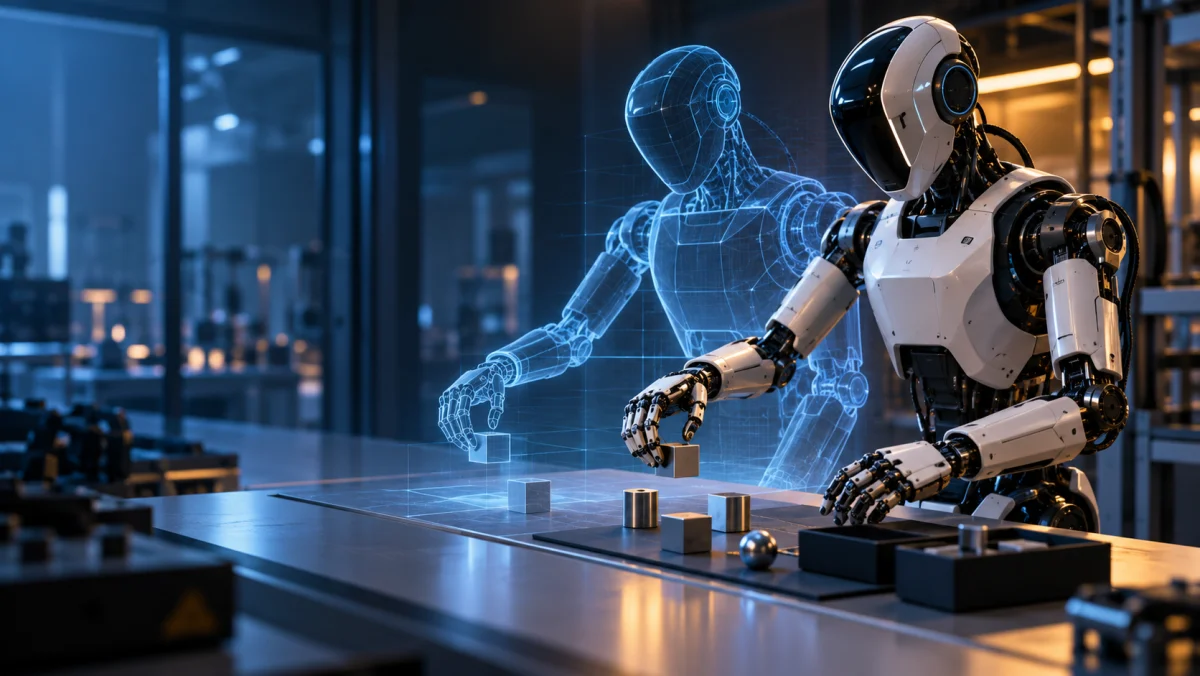
Where Humanoid Robots Really Work in 2026—and Are They Safe?
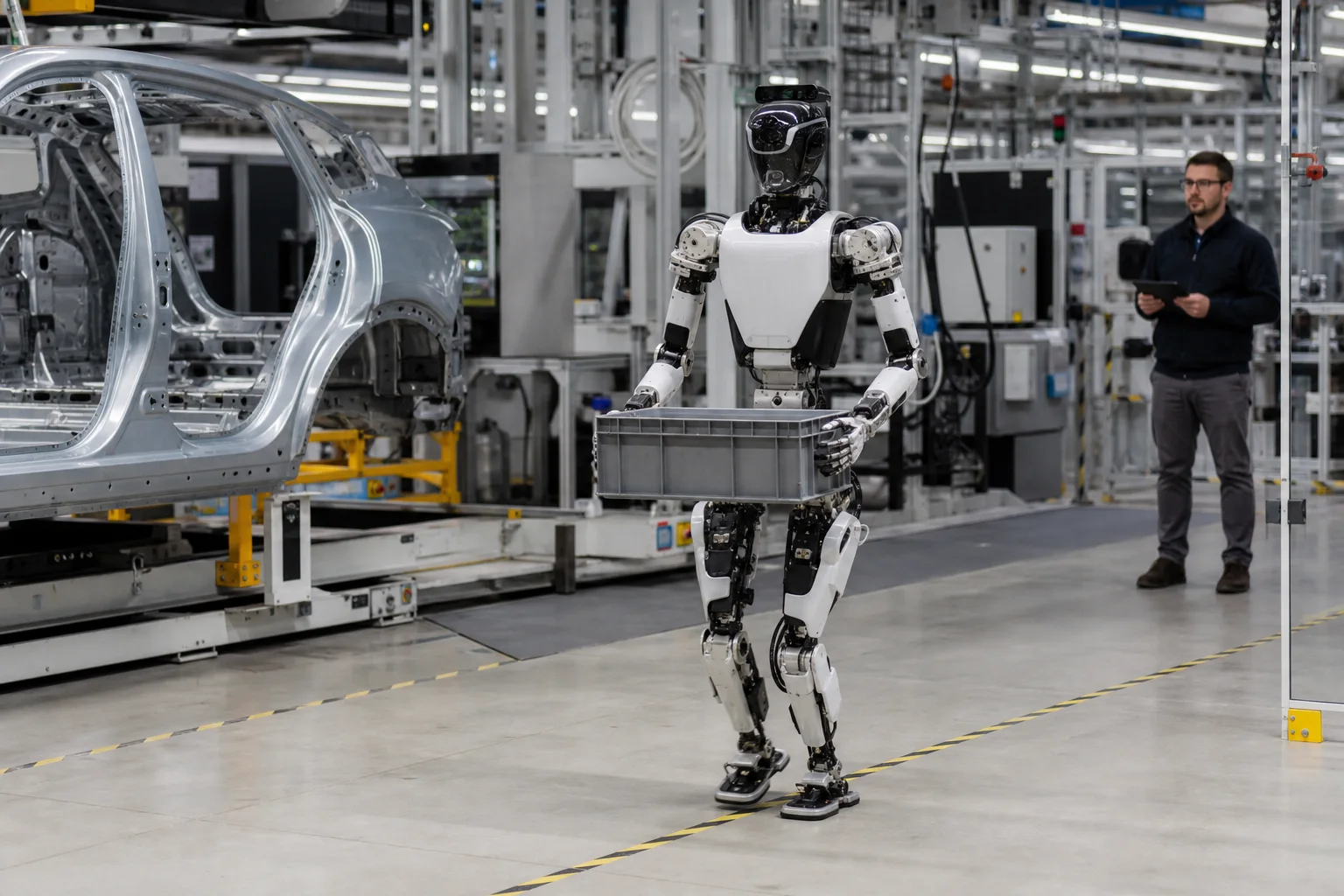
Humanoids have started working, but not as trade-show videos suggest. The most credible cases are in factories and warehouses where the floor is flat, the flow is mapped and the task is repetitive. They move totes, feed a line or handle defined parts. They do not replace an entire workshop.
The two most useful pieces of evidence
BMW says Figure 02 supported production of more than 30,000 BMW X3 vehicles at Spartanburg in 2025, working ten-hour days from Monday to Friday. The figure comes from BMW, which is stronger evidence than a robot maker's video alone, but it still does not reveal intervention rate, cost per operation or total availability.
In logistics, GXO signed a multi-year agreement with Agility Robotics after a pilot. Digit takes totes delivered by mobile robots and places them on a conveyor. Agility says the deployment passed 100,000 totes moved. The task is narrow, but repeated volume is exactly what many demonstrations lack.
Why use a human shape?
Factories already contain excellent specialist robots. A fixed arm is often faster, more precise and cheaper than a biped. A humanoid becomes interesting when a company wants to reuse workstations, doors, shelves and tools designed for people without rebuilding the whole facility.
That advantage must outweigh price, energy use, complexity and fall risk. If a task never changes, a conveyor or conventional arm often wins. If several nearby tasks evolve, a mobile platform with two arms may become economical.
Safety is not one button
ISO 10218-1:2025 covers safe industrial-robot design; Part 2 covers integration of the application and cell. The distinction matters. A compliant robot does not automatically make a badly organised line safe.
A serious installation combines speed and force limits, emergency stops, monitored zones, collision avoidance, restart procedures, training and risk assessment. It must account for the robot and its payload falling. AI functions must not bypass the safety controller.
Service robots accessible to the public are not covered by exactly the same framework. A home humanoid faces different hazards: unpredictable children, stairs, knives, pets and privacy. A factory demonstration does not establish domestic safety.
The economics to request
A purchase price is incomplete. Real cost includes integration, possible teleoperation, maintenance, parts, energy and downtime. Useful metrics are successful cycles, minutes of human help per operating hour, availability and avoided incidents.
Robotics-as-a-service shifts part of the cost into a subscription and gives the supplier an incentive to keep the machine running. It does not guarantee a return: cost per task still needs comparison with simpler automation and existing human operations.
Jobs: local substitution, broader change
Near-term targets are repetitive, physical and hard-to-fill tasks. A company may remove some roles while creating integration, maintenance and supervision work. The outcome depends on deployment speed, how gains are shared and whether workers can retrain; no video can settle that question.
The 2026 verdict is precise: industrial humanoid work exists, but in a small number of controlled flows. The question is no longer only “can it walk?” but “how many productive hours, at what cost and with what safety?” To understand the components behind these results, read our guide to how humanoids work.
For industrial evidence by machine type, compare Atlas at Hyundai with Schaeffler’s AEON programme. Amazon’s installed robot fleet and the IFR industrial-robot report provide context beyond humanoids. These dossiers keep announcements, trials and installed machines separate.
✔ How we checked this
Volumes and tasks are attributed to the companies publishing them; safety standards are checked with ISO.
Information verified as of the publication or update date shown. Technology moves fast — check the sources below.
Sources
- BMW Group to deploy humanoid robots in production in Germany — BMW Group
- Digit deployed at GXO in humanoid RaaS agreement — Agility Robotics
- Digit moves over 100,000 totes — Agility Robotics
- ISO 10218-1:2025 — Safety requirements for industrial robots — International Organization for Standardization