Starship vs the World: The Rockets Actually Competing for Orbit in 2026
The biggest rocket is not automatically the best launcher. Customers buy an orbit, a date, reliability and fairing volume—not a spectacular video. The 2026 market therefore contains three different realities: vehicles flying routinely, heavy launchers still building cadence, and reusable systems that first have to prove they can fly again.
SpaceX remains the benchmark because of Falcon 9. Starship aims at a much larger change in scale, but it is still a flight-test programme. Blue Origin, Europe, China, Japan, India, ULA and Rocket Lab are pursuing different jobs. Ranking them without defining the mission is meaningless.
The honest dashboard
| System | Position on 18 July 2026 | Reuse | The job it is built for |
|---|---|---|---|
| Falcon 9 | Operational at high cadence | First stage and fairings | Today's commercial benchmark |
| Starship | Flight test; Flight 12 reached space | Full system reuse is the goal | Very high mass, orbital refuelling, Moon |
| New Glenn | Three orbital campaigns; preparing to return | First stage designed for at least 25 flights | Heavy and high-energy payloads |
| Ariane 6 | Operational; ESA reports eight successful insertions in a row | No | European autonomous access and institutional missions |
| Long March 10B | Orbital debut and first-stage recovery on 10 July | First stage; actual reuse still to prove | Chinese constellations and higher cadence |
| Vulcan | Operational, with a solid-booster anomaly under technical review | Not in its current configuration | US national security and heavy missions |
| H3 | Japan's institutional launcher, consolidating after a late-2025 failure | No | Japanese and commercial missions |
| LVM3 | Operational | Not today | Indian heavy payloads and the basis for Gaganyaan |
| Neutron | In development | First stage and captive fairing planned | Medium constellations and responsive launch |
The table deliberately separates “designed for reuse” from “recovered” and then “reflown.” Those are three different levels of evidence.
Starship: the highest ceiling, not yet a routine service
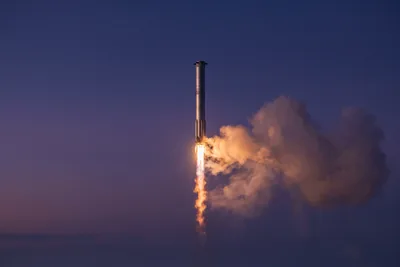
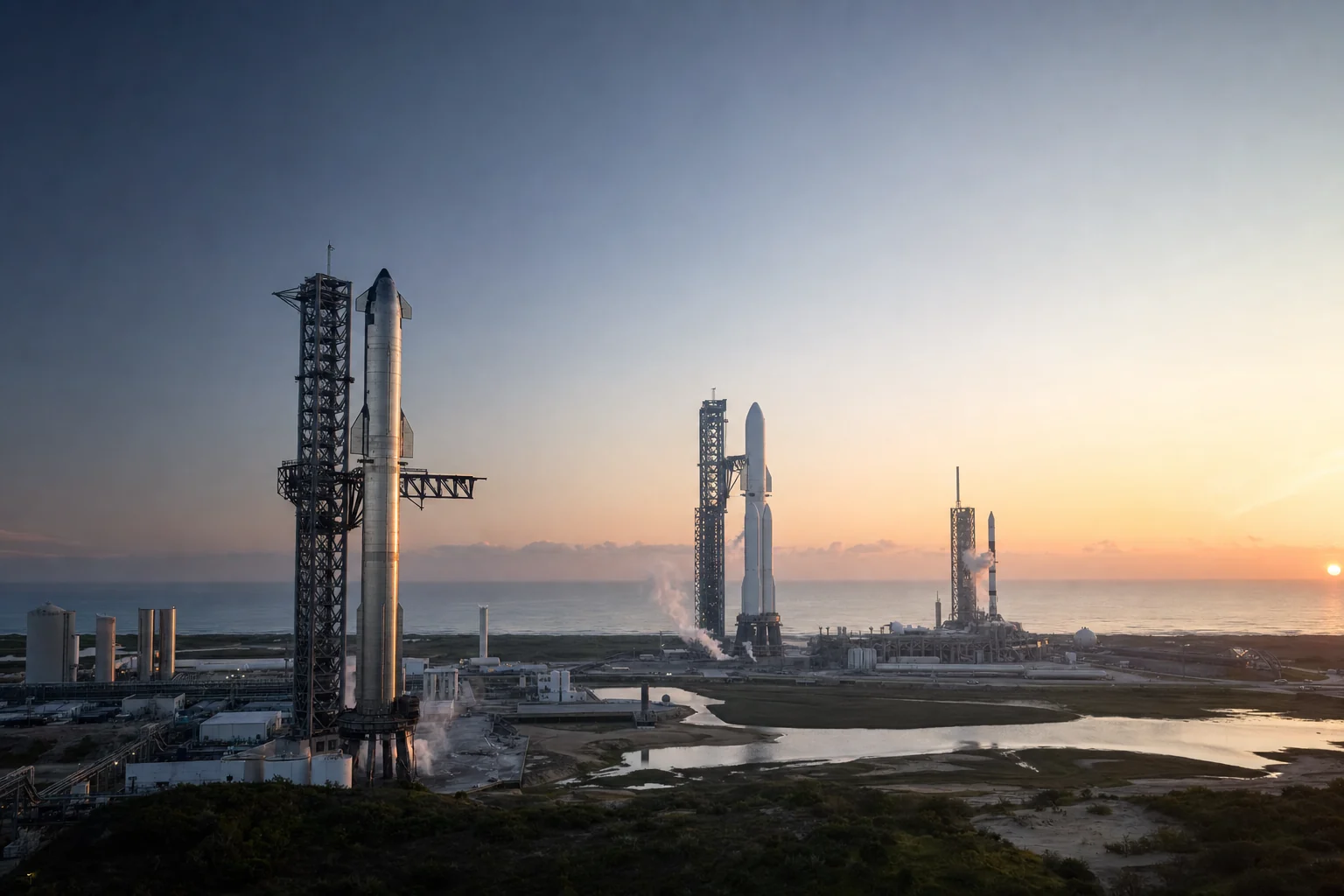
Flight 12 on 22 May 2026 was the first integrated V3 Starship and Super Heavy powered by Raptor 3, launching from Starbase's second pad. SpaceX says the ship reached space, completed a payload-deployment demonstration, relit an engine in space and performed its landing manoeuvre. Super Heavy completed ascent, but its boostback did not finish and the stage was lost.
The FAA closed the mishap investigation on 13 July. It cited heat effects on propulsion components and incorrect engine-alarm settings as the two most probable causes of the booster loss. Flight 13 may proceed once all remaining licensing requirements are met.
That is real progress for the version intended to carry the next test phase. It is not proof of a fully reusable transport system. SpaceX still has to recover both stages, inspect them, turn them around quickly and repeat the cycle with operational payloads.
The lunar programme raises the stakes. NASA now plans a 2027 low-Earth-orbit demonstration involving SpaceX and Blue Origin lander test articles before a crewed lunar-surface mission targeted for 2028. Starship therefore has to demonstrate orbital refuelling, rendezvous, docking and reliability well beyond one good flight.
New Glenn: the most tangible new heavy competitor
New Glenn is no longer a paper rocket. Its first stage landed at sea on NG-2 in November 2025. Blue Origin advertises a seven-metre fairing, 45 tonnes to low Earth orbit and more than 13 tonnes to geostationary transfer orbit. The booster is designed for at least 25 flights.
Its 2026 campaign also showed how hard cadence is. NG-3 suffered a second-stage thrust anomaly; the FAA-supervised investigation traced it to a cryogenic leak that froze a hydraulic line and set nine corrective actions. A 28 May ground-test incident then damaged launch-complex equipment. Blue Origin is targeting a return before year-end, but that remains a forecast.
New Glenn has large volume, a recoverable stage and engines that also fly on Vulcan. Its immediate test is not beating Starship on size. It is flying consecutive missions without long pauses.
Ariane 6, Vulcan, H3 and LVM3: autonomy before spectacle
Ariane 6 does not recover its core, limiting its long-term economics against reusable launchers. It answers a different priority: guaranteed independent European access to space. On 17 June, an Ariane 64 with new P160C boosters deployed 36 Amazon Leo satellites. ESA reported an eighth successful insertion in succession and a European payload-mass record.
Vulcan serves missions including US national-security launches. Its February USSF-87 flight reached the intended orbit despite a significant anomaly on one of four solid boosters. Precise delivery matters, but an anomaly still requires investigation before a vehicle can be called routine.
Japan's H3 and India's LVM3 are not exact SpaceX copies. They support national programmes and institutional satellites; LVM3 also underpins preparation for the crewed Gaganyaan programme. Strategic sovereignty is their advantage. Limited cadence and no operational recovery are their commercial disadvantages.
Neutron: the middleweight bet
Rocket Lab is not building another super-heavy vehicle. Neutron targets 13 tonnes to low Earth orbit, using nine methane-fuelled Archimedes engines, a recoverable first stage and a fairing that stays attached to that stage. It is sized for constellations too large for Electron without requiring an entire Starship.
A first-stage tank ruptured during hydrostatic qualification testing in January 2026. Rocket Lab said another tank was already in production and put the schedule under review. Its investor target remains a first launch in the fourth quarter of 2026. Until lift-off, that is a target rather than operational status.
China has moved from pursuit to proof
On 10 July, Long March 10B placed its satellite in the intended orbit and returned its first stage vertically into a cross-shaped net on a recovery ship. CNSA describes it as China's first controlled recovery of an orbital first stage and the world's first sea-based net capture.
The vehicle is about 63 metres tall, with a stated reusable-configuration capacity of 16 tonnes to a 200-kilometre low orbit. Reflight is the next decisive data point: recovery proves guidance and capture; flying the same hardware again shows that recovery has economic value. Our deep dive into China's reusable-rocket race maps the other contenders and the evidence still missing.
Who wins for each mission?
- Buying a launch today: Falcon 9 remains the cadence and reuse benchmark.
- Largest disruptive potential: Starship, if testing becomes full recovery and repeat operations.
- A second reusable US heavy launcher: New Glenn has the most tangible base, but needs stable infrastructure and cadence.
- European autonomy: Ariane 6 already performs its strategic job, even without reuse.
- Biggest 2026 advance: Long March 10B has given China its first orbital-booster recovery evidence.
- The medium market: Neutron has an attractive design, but still has to complete its first flight.
Verdict
Starship leads the ambition race, Falcon 9 leads operations and Long March 10B leads recent progress. New Glenn is the new heavy launcher that has both reached orbit and recovered a stage. Ariane 6, Vulcan, H3 and LVM3 remain essential because countries do not entrust all access to space to a single provider.
The meaningful 2027 ranking will not be based on rocket height. It will be based on four numbers: successful missions, stages reflown, days between flights and the price actually paid by the customer.
✔ How we checked this
Flights, anomalies and programme status were checked against operator and agency publications through 18 July 2026. Advertised performance remains a manufacturer target until demonstrated on a mission.
Information verified as of the publication or update date shown. Technology moves fast — check the sources below.
Sources
- Starship Flight 12 — SpaceX
- FAA General Statements — FAA
- New Glenn — Blue Origin
- Ariane 6 sets a new European record — ESA
- Neutron — Rocket Lab
- H3 Launch Vehicle — JAXA
- Launchers — ISRO
- China's first controlled booster recovery — CNSA