Can Virgin Galactic Really Return in 2026? Delta, Price and Risk
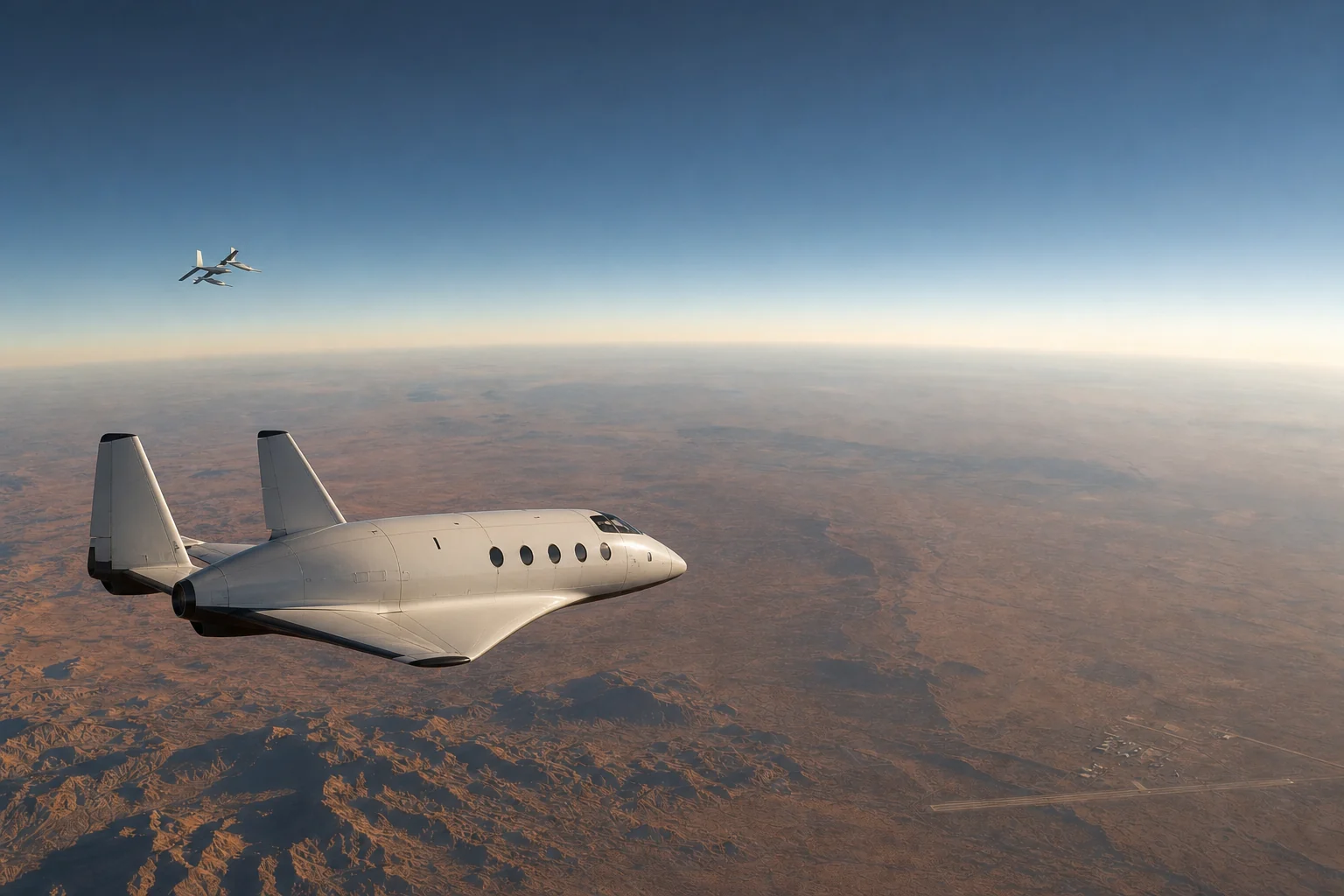
Virgin Galactic ended VSS Unity's commercial flights in June 2024 to concentrate resources on a new generation of spaceplanes. Two years later, the company says its first Delta vehicle is in ground testing, targeting glide flights in the third quarter of 2026 and a first spaceflight in the fourth.
The potential return arrives at an unexpected moment. Blue Origin has paused New Shepard for at least two years while shifting resources to lunar programmes. Virgin therefore has a window to become the main US service dedicated to suborbital tourism again. It still has to finish testing, protect its cash and prove Delta can fly far more often than Unity.
First, do not confuse the two Virgins
Virgin Galactic builds piloted spaceplanes released from a carrier aircraft above New Mexico. They follow a suborbital trajectory, offer a few minutes of microgravity and glide back to a runway. The company still exists and is developing Delta.
Virgin Orbit launched small LauncherOne rockets from a Boeing 747. It filed for Chapter 11 protection in April 2023 and its operations were liquidated. Virgin Orbit's bankruptcy does not mean Virgin Galactic disappeared; they were different companies, vehicles and missions.
Where Delta actually stands
The strongest public evidence as of 18 July is:
- the first new spaceship has moved from assembly to the test-and-launch hangar;
- ground testing is under way;
- a static article and a second vehicle are in production;
- VSS Unity returned to glide flight on 27 May to train pilots, maintenance and mission control;
- Virgin targets new-vehicle glide flights in Q3, followed by rocket-powered spaceflights in Q4.
“Targets” is the important word. Ground testing can uncover structural problems, glide flight can expose control issues, and powered flight can reveal propulsion or thermal faults. A corporate schedule is not permission to carry customers.
Why Delta has to change the economics
Unity demonstrated the experience: release from a carrier plane, rocket burn, microgravity, feathered re-entry and runway landing. Its cadence and maintenance never supported mass operations.
Virgin describes each Delta spaceship as designed to fly twice a week and for more than 500 missions over its life. The cabin can carry up to six mission specialists, or combine four people with research racks. Those are design goals until a fleet repeats them.
The economics depend on flights per vehicle, turnaround time and occupancy. At the $750,000 price for the limited ticket series reopened in 2026, six sold seats would represent $4.5 million in theoretical gross revenue. Staff, rocket motor, carrier aircraft, insurance, spaceport and maintenance still have to be paid. An expensive cabin sitting in a hangar is not a spaceline.
Cash creates a race against time
At 31 March 2026, Virgin Galactic reported $251 million in cash, equivalents and marketable securities. The quarter produced a $65 million net loss, $54 million in operating cash use and $40 million in capital expenditure.
Those figures do not prove immediate bankruptcy, but they show the constraint. Delta needs to move from development spend to commercial revenue without a long slip. Raising equity can fund the programme at the cost of shareholder dilution. The useful indicator is not the daily share price; it is months of available cash against spending and flight milestones.
Virgin versus Blue Origin: two different experiences
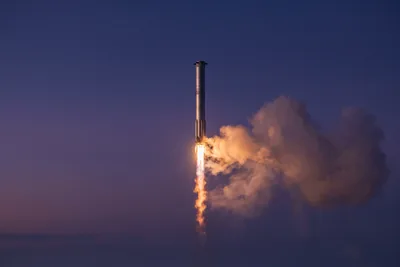
New Shepard launches vertically with an automated capsule, crosses the operator's chosen space boundary and returns under parachutes. Virgin takes off under an aircraft, accelerates with a rocket motor and glides home with two pilots.
Blue Origin reported 38 New Shepard flights, 98 people and more than 200 payloads before the pause. Virgin reports 12 suborbital spaceflights and 37 passengers and crew across its previous generation. Blue has more recent repetition; Virgin may have the market temporarily to itself if Delta is ready before New Shepard returns.
The competition is not limited to tourism. Suborbital flights can carry experiments for several minutes of microgravity. That work is less visible on social media but can fill missions for universities, companies and agencies when every tourist seat is not sold.
What “safe” means in US commercial spaceflight
The FAA licenses launches and protects the uninvolved public on the ground and in the airspace. It states that it does not certify commercial spacecraft as safe for occupants in the same way an airliner is certified. Participants must be informed of the risks and provide written consent. The current US moratorium on new occupant-safety regulations runs through 1 January 2028.
The test record therefore matters: number of glide flights, powered flights, anomalies, changes between vehicles and return-to-flight time. A famous founder or an expensive ticket cannot substitute for that evidence.
Five proofs to demand before calling it a return
- Delta's first glide flight, not only Unity's.
- A complete powered flight, entry and landing without a major anomaly.
- Licensing and approvals for the commercial configuration.
- Two closely spaced missions, testing the cadence promise.
- Two available vehicles, so one problem does not stop the entire service.
The first flight with employees or guests will demonstrate capability. The commercial transition arrives when paying customers fly repeatedly without every mission remaining an exceptional event.
Verdict
Virgin Galactic has a vehicle in ground testing, a team rehearsing with Unity and a clear fourth-quarter target. It also has a rare opening while New Shepard is paused. The programme is more concrete than a presentation.
Delta has still not flown. Two missions per week, 500 flights per vehicle and 2026 commercial service remain forward-looking targets. The credible scenario is neither “Virgin is dead” nor “mass space tourism has arrived.” It is a tight, financially constrained test campaign that could reopen a very expensive niche if the next few months avoid a major delay.
✔ How we checked this
Milestones, prices and financial figures are those published by Virgin Galactic and are identified as forward-looking targets. New Shepard's status and the safety framework were checked against Blue Origin and the FAA.
Information verified as of the publication or update date shown. Technology moves fast — check the sources below.
Sources
- First-quarter 2026 results — Virgin Galactic
- VSS Unity returns to glide flight — Virgin Galactic
- Full-year 2025 results and $750,000 ticket — Virgin Galactic
- New Shepard pauses flights — Blue Origin
- Commercial Human Space Flight — FAA
- Virgin Orbit bankruptcy filing — SEC