PRIMA: France's CNES is a partner on NASA's new space telescope
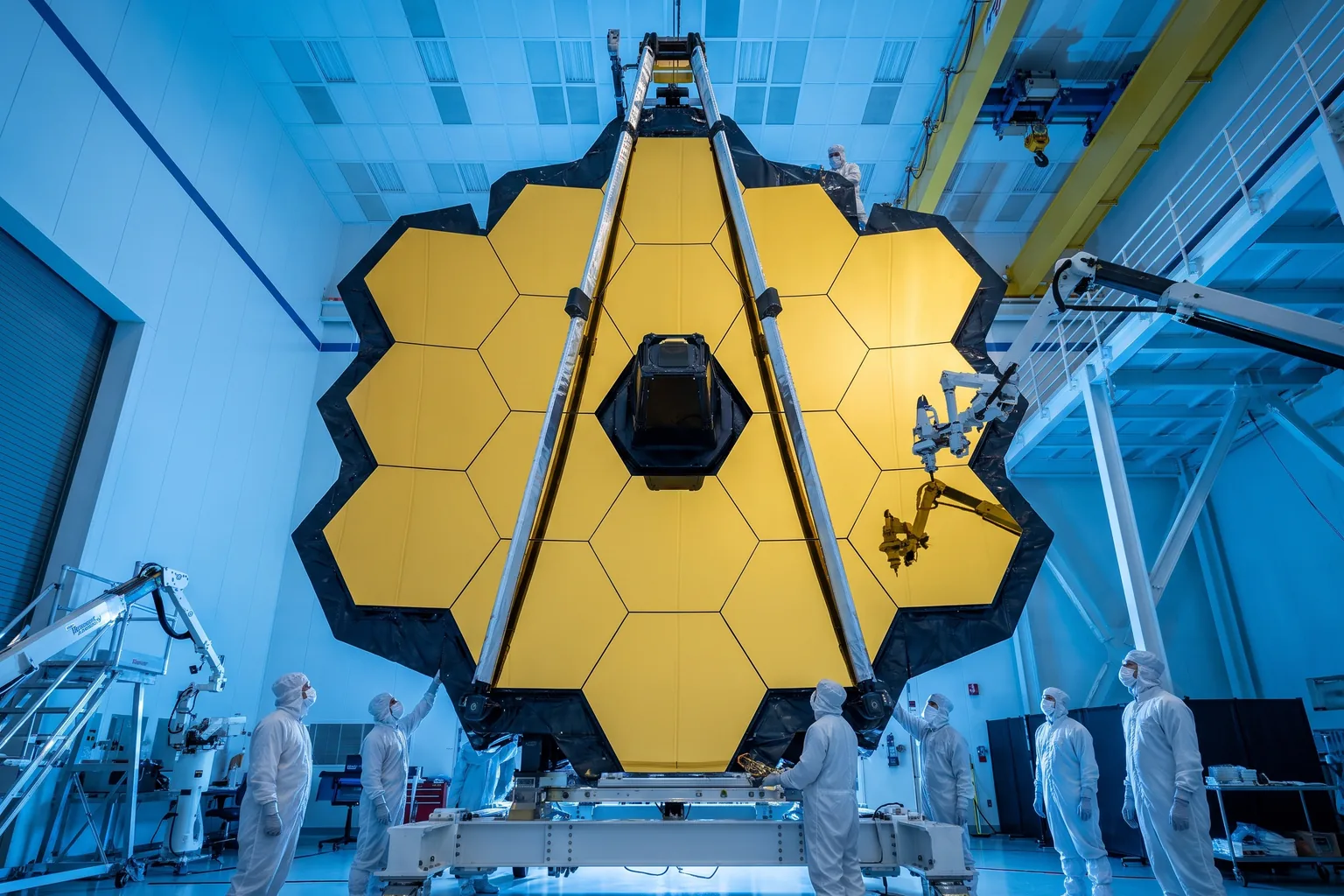
NASA announced on September 23, 2026 that astrophysics mission PRIMA has entered Phase B, with a project cost capped at $1.2 billion if that cap is confirmed. The CNES is one of seven international partners on the mission, alongside Italy, Germany, Canada, Korea, Japan and the UK Space Agency.
That is the French part of the announcement: France is a named partner on a space telescope in NASA's new "Probe Explorers" class, with a target launch date of 2033.
What PRIMA is
PRIMA stands for PRobe far-Infrared Mission for Astrophysics. The name states the programme: an astrophysics mission in the far infrared, which is the part of the infrared spectrum where light from the coldest objects in the universe sits.
The telescope is a reflector 5.9 feet across, roughly 1.8 metres. That diameter is much more modest than the mirror of the Very Large Telescope, which is consistent with a space mission: the cost of a larger mirror climbs very steeply, while a 1.8 m mirror stays within an envelope well known to fly.
The figures in the release
| Characteristic | Announced value |
|---|---|
| Phase reached | Phase B |
| Mission class | Probe Explorers (created within the Explorers program) |
| Project cost cap | $1.2 billion if confirmed |
| Telescope aperture | 5.9 feet (1.8 m) |
| Target launch | 2033 |
| Planned mission duration | 5 years |
| Management | JPL, with Goddard and Marshall |
| Partners | CNES, ASI, DLR, CSA, KASI/KASA, JAXA, UK Space Agency |
The $1.2 billion cap excludes launch and other non-project costs. The distinction matters: it explains why that figure cannot be compared as it stands to the total cost of a mission.
A new class, but not an invented one
NASA describes PRIMA as the first mission of the "Probe Explorers" class, a category created within the Explorers program. The word "new" needs qualifying.
The 2024 selection had already produced two missions in that family: AXIS in X-rays and FAR-ULT in the far infrared. The class is therefore established, with two precedents, rather than designed around a single project. That is a useful guarantee of method: a new mission category normally arrives with a comparison group.
PRIMA is the first mission in the class to enter Phase B, and its entry into the category is documented in the release itself.
What the far infrared adds
This is the least technical part of the announcement and the most useful for a general reader.
A telescope like Hubble, and like Webb across part of its range, observes mostly visible light and the near infrared. That light is produced by hot objects: stars, dwarf stars, matter in strong interaction. A cold object emits very little at those wavelengths. Its light is faint, and in the case of dust, completely absorbed.
The far infrared changes the terms on two fronts. It makes it possible to observe cold matter, which means the regions where stars form, often wrapped in dust that is opaque in visible light. It also makes it possible to see the light shifted far toward the red emitted by the most distant galaxies, light that travelled a long way and, on the way, ended up in this part of the spectrum.
Concretely, a far-infrared telescope does not look at the same objects as the earlier ones. It looks at what the earlier ones cannot reach. That is the rationale for PRIMA, and the reason the field needs a dedicated observatory rather than one more instrument on an existing telescope.
Nicky Fox, NASA's science lead, described PRIMA as "humanity's next window into the deep universe." That is NASA's own framing, and it captures the change accurately: a new window, not a replacement.
The CNES among seven partners
The CNES appearing in that list is not a courtesy mention. Seven national space agencies or national organisations are named: the CNES for France, ASI for Italy, DLR for Germany, CSA for Canada, KASI and KASA for Korea, JAXA for Japan, and the UK Space Agency for the United Kingdom.
Mission management sits with JPL, alongside Goddard and Marshall. JPL also carries a long tradition of space robotics, from landing rovers to satellite interception missions, which makes it the natural home for a long-duration mission with no intervention planned. Our file on space robots covers what that capability changes for an autonomous mission.
PRIMA was recommended by the 2020 decadal survey of the National Academies, which ties the mission to long-term science planning rather than an opportunistic choice. For France, that is the difference between a tender and a place in the programme.
The Webb, Roman, PRIMA cadence
Shawn Domagal-Goldman placed PRIMA in a continuity: it joins Webb and Roman, whose launch was reported. Summarised rather than quoted, his reading is that these missions follow one another in time, each covering a different band of the spectrum, with PRIMA completing the set.
That reading has a practical consequence for French and European astronomy. Far-infrared observations are not improvised: they require dedicated telescopes, a calendar known in advance, and instruments built over several years. A partner can therefore anticipate its needs across several budget cycles, which makes national planning considerably more reliable.
Verdict
The September 23, 2026 announcement rests on three verifiable elements: PRIMA has entered Phase B, its project cost is capped at $1.2 billion, and the CNES is a named partner. Everything else is interpretation, and should be presented as such.
Phase B is not yet a flight. A project enters Phase B and can then be delayed, reworked or stopped, and the cap itself is conditional on confirmation. The 2033 target is a target, not a schedule commitment.
What is solid is France's position. Being a named partner on a first-order astrophysics mission, with a capped cost and a five-year duration, anchors the CNES in American decade-scale planning. That is a long research position, not a one-off contract.
✔ How we checked this
Facts checked September 24, 2026 from the NASA release on PRIMA, timestamped September 23, 2026 at 16:09:42 UTC and updated September 24, 2026. The cited characteristics (Phase B, the $1.2 billion cost cap, the 2033 target launch, the 5.9-foot aperture, the partner list) come from that release. The far-infrared explanation is general background and contains no figures. No other PRIMA text was opened.
Information verified as of the publication or update date shown. Technology moves fast — check the sources below.
Sources
- NASA news releases — NASA
- French space agency CNES — CNES