Starship reaches orbit for the first time and deploys 26 Starlink V3
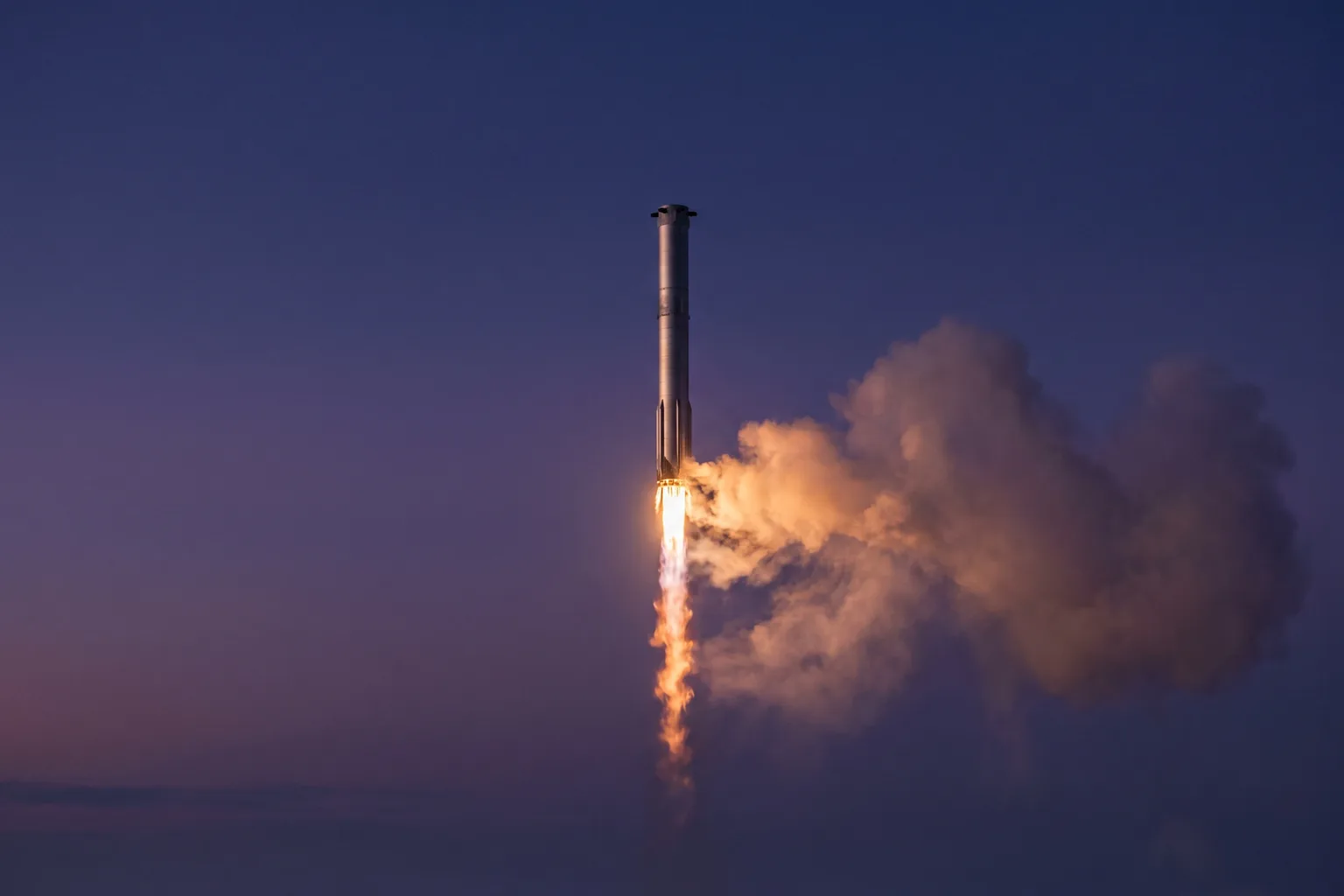
On September 28, 2026, Starship reached Earth orbit for the first time and deployed 26 Starlink V3 satellites during the pass. Flight 14, launched from Starbase in Texas, therefore met two objectives no earlier flight had reached. The same flight then ended in an early re-entry and a crash into the Pacific after a loss of engines: a milestone crossed, not a clean success.
The distinction is not pedantry. A launcher that reaches orbit and delivers its payload is progress; a vehicle that does not come back as planned leaves a question open. Both were true on September 28, 2026.
Flight 14 in numbers
| Element | What was reported |
|---|---|
| Launch date | September 28, 2026 |
| Launch site | Starbase, Texas |
| Flight | 14 |
| First achieved | First orbital insertion for Starship |
| Satellites deployed | 26 Starlink V3 satellites |
| Planned duration | About 10 hours |
| Outcome | Early re-entry, crash into the Pacific |
Ars Technica headlined it on September 28: "SpaceX's Starship goes orbital, deploying first next-gen Starlinks." That wording says exactly two things, and not two more. It does not say the flight was a complete success, and it does not call Starship an operational vehicle. It says orbit was reached and next-generation satellites reached orbit.
That is the level of precision to keep when describing this flight. "The first time Starship reached orbit" is accurate. An unqualified absolute world first is not.
The 26 Starlink V3 satellites
Spaceflight Now and Light Reading reported on the evening of September 28 that 26 Starlink V3 satellites were deployed. This was also the first flight ever to carry that new satellite generation.
The test was therefore not only about the launcher. It tested a launcher-satellite pairing that had never flown. The 26 satellites left from a configuration and deployment sequence that were new, which explains why part of the flight's technical coverage concerned Starlink as much as Starship.
For the constellation the result is concrete: satellites in orbit. For SpaceX the next question is yield, meaning what each satellite placed in orbit costs through Starship compared with previous launch methods.
The engine loss and the early re-entry
Accounts of the end of the flight are not perfectly aligned, and it is better to say so than smooth the gap over.
Al Jazeera, on September 28, reported an engine incident during ascent that did not prevent orbital insertion. ScienceTimes and Mashable, on September 29, describe a different end of flight: Starship completed its orbit, then re-entered earlier than planned after a loss of engines, ending in a fall into the Pacific.
Available reporting does not settle whether the engine loss is the one that occurred during ascent or a second incident later in the flight. The end result is the same under either reading: an orbit, a deployment, then a crash.
A flight of roughly ten hours was planned at departure. It ended after about one orbit. Orbiting once is enough to reach orbit, to separate the payload and to deploy satellites, which is why the milestone holds. It is not enough to test anything that needs repeated passages, including the deorbit burn profile and the heat-shield performance a landing would require. That is the difference between a planned mission and an interrupted one, and it should stay visible.
The lunar angle, and what it does not say
Futurism wrote on September 29 that the early re-entry was alarming for NASA's lunar landing, Starship being the planned HLS lander for Artemis III. That is Futurism's interpretation. It is not a NASA statement, and no source consulted shows NASA drawing a public conclusion from the episode.
The distinction is not academic. Presenting a commentary position as an institutional announcement removes the only fact that matters here: NASA has not ruled.
What can be said firmly is different. Starship is the planned lander for Artemis III, and the race to the Moon pits a US program against Chinese ones. A successful orbital flight with a payload deployment is real technical progress. An uncontrolled re-entry is an open problem, on a vehicle that will eventually need to land somewhere far more demanding than the Pacific. Both readings are compatible on the same day.
What this flight changes, and what it does not prove
It changes Starship's status, since it becomes the first vehicle in its series to reach orbit. It makes credible a capability SpaceX had claimed for years without a complete public demonstration. It also delivers the first Starlink V3 flight.
It does not demonstrate controlled reuse, which requires recovering a stage intact, nor long-duration flight, nor a splashdown. A Starship landing remains undone in the available sources, and that is precisely the step Artemis III is waiting on.
Those two realities sit together in the race for reusable launchers: SpaceX is trying to make orbit routine, China is working on its own return programs, and Europe is building a launcher that reuses nothing. Flight 14 moves the conversation to the harder half, the part that happens after orbital insertion.
Verdict
On September 28, 2026, Starship did something it had never done before: it orbited and delivered 26 Starlink V3 satellites. That is a real, measurable step, and the headline describing it is accurate.
It is also a flight that ended in a crash in the ocean after an early re-entry. Both sentences have to be read together, in that order. To follow what comes next, the launch calendar will show whether SpaceX treats the engine loss as an isolated incident or as a design fix.
✔ How we checked this
Facts checked September 30, 2026 from the SpaceX mission page for Starship Flight 14 dated September 28, 2026, then cross-checked against Ars Technica, Reuters, Spaceflight Now, The New York Times, Al Jazeera, ScienceTimes, Mashable and Futurism. The Ars Technica link is the verified deep URL of the article. The other press links point to publisher sections because their individual permalinks could not be verified. The end of the flight is described as an early re-entry followed by a crash, never as a successful return.
Information verified as of the publication or update date shown. Technology moves fast — check the sources below.
Sources
- Starship Flight 14 — SpaceX
- SpaceX's Starship goes orbital, deploying first next-gen Starlinks — Ars Technica
- Reuters space coverage — Reuters
- Spaceflight Now — Spaceflight Now
- Futurism — Futurism