The robots already working in space (and what comes next)
While humanoid robots perform on stage, other robots have been doing real work for decades — millions of kilometres away, with no audience. Space is the one field where robotics never had to promise anything: it delivers, it sometimes fails, and all of it is documented.
It is also the best place to learn the difference between a real capability and a well-edited video. Here is what these machines actually do, what they cannot do, and where the line sits.
What is confirmed
- a rover drives on Mars choosing its own route, and holds a record of 699.9 metres covered with no human review;
- the first drives on another world planned by generative AI were executed on 8 and 10 December 2025;
- a helicopter flew 72 times on Mars after being designed for five flights;
- robotic arms have been swapping batteries and cameras on the ISS for years;
- on 30 June 2026, two astronauts went outside to repair one of those arms;
- an orbital servicing vehicle launched on 21 July 2026 without having served a single customer yet.
Why space forces genuine autonomy
On Earth, teleoperation solves almost everything: when a robot hesitates, a human takes over remotely. That is the crutch behind most humanoid demonstrations, and it is rarely advertised.
In space the crutch disappears. A radio signal to Mars takes from a few minutes to more than twenty to arrive, and as long again to come back. By the time an operator sees an obstacle and sends the command to stop, the rover hit it long ago. Autonomy is not a marketing option here: it is the only possible architecture.
That constraint produced a very different kind of robotics from the trade-show variety — slow, redundant, verifiable, and built to stop cleanly when it does not understand.
Mars: the rover that drives itself
Perseverance is the first rover with two computers working together, one of them dedicated to image processing, which lets it analyse terrain while moving instead of stopping at every step. JPL published its records: 347.7 metres covered in a single Martian day, and 699.9 metres with no human reviewing the path before it was driven.
Two more recent capabilities change the scale. On 8 and 10 December 2025 the rover executed the first vehicle drives on another world planned by generative AI: the model reads orbital imagery and elevation data to propose waypoints in place of human route planners. NASA then deployed global localisation: the rover compares its navigation-camera images against orbital imagery and works out where it is by itself, in about two minutes and to roughly 25 centimetres.
The result is measurable. Perseverance passed marathon distance — 42.195 kilometres — in June 2026, five years and four months after its first metre. The Opportunity rover needed eleven years and two months to cover the same ground.
Ingenuity: the demo that beat its brief, then broke
The Ingenuity helicopter was meant to be a technology demonstration: five experimental flights in thirty days. It flew 72 times over nearly three years, covered more than fourteen times the planned distance and logged over two hours in the air.
Its ending is as instructive as its successes. On the 18 January 2024 flight, at touchdown, at least one rotor blade was damaged; the mission was declared over on 25 January 2024. No release dressed that up as a "transition". That is exactly the transparency missing from most commercial robotics announcements.
In orbit: the arms that save spacewalks
On the International Space Station, the mobile servicing system pairs Canadarm2, installed on 26 April 2001, with Dextre, a two-armed manipulator. Dextre performs external maintenance — changing batteries, replacing cameras — that astronauts previously had to handle on spacewalks. The Canadian Space Agency puts the system's workload at more than a hundred days of work a year.
The limit, though, came from the arm itself. On 30 June 2026, NASA astronauts Chris Williams and Jessica Meir went outside for about six hours and forty minutes to replace a failed wrist joint on Canadarm2. A quarter of a century after installation, the robot that saves spacewalks required one.
That is the nuance demonstrations skip: a reliable robot does not remove the need for humans, it moves that need to maintenance.
Repair instead of replace: the job that is opening up
A geostationary satellite can have a perfectly working payload and simply be out of fuel. Northrop Grumman first attacked the problem without fine robotics: Mission Extension Vehicle 1 docked with an Intelsat satellite and acted as its propulsion for five years, then went on to assist an Optus satellite from May 2025; MEV-2 remains docked to Intelsat 10-02.
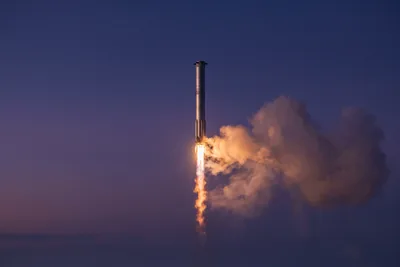
The next step launched on 21 July 2026: the Mission Robotic Vehicle left Cape Canaveral on a Falcon 9 with three life-extension pods, which it is meant to fit onto ageing satellites — the operator talks of up to thirty installations across a ten-year operational life. We covered the mission and its risks in MRV: the satellite-repair robot has launched.
Worth keeping in mind: it launched, it has repaired nothing. Its first operations are expected in 2027.
The Moon: robots go before crews
NASA's CLPS programme hands lunar payload delivery to private robotic landers. Two missions are aiming at late 2026: Firefly's Blue Ghost 2, targeting the far side, and Intuitive Machines' IM-3 towards the Reiner Gamma region. Schedules in this programme have slipped repeatedly, and a lunar landing remains one of the least reliable manoeuvres in the industry.
The point is not spectacle: these machines measure terrain, dust and communications before humans go back. A robot that tips over costs a mission; a crew that tips over costs lives.
What is not true yet: bringing the samples home
Perseverance has done the robotic half of the job: twenty-eight sealed titanium tubes collected in Jezero Crater. The rest does not exist yet. The sample-return architecture is still not settled, the decision has slipped to mid or late 2026, two competing options target a cost of roughly $5.8 to $7.7 billion against eleven previously, and the programme was explicitly proposed for cancellation in a budget request.
Put plainly: samples are sitting on Mars, and nobody yet knows for certain how or when they come back. It is the clearest illustration of the real frontier. Robots can travel, sample and decide alone. What they cannot yet do is close an interplanetary supply chain.
The RoboFutur verdict
Space robotics is less spectacular than a dancing humanoid, and infinitely better evidenced. It advances through measured capability — metres driven unsupervised, batteries replaced, seconds of onboard computation — and it publishes its failures.
That is the lens to apply everywhere else. A robotic capability is real when it is repeated, quantified and documented, including when it breaks. Everything else is a demonstration. The same method applies to machines down here: see our checklist for verifying a humanoid robot demo.
✔ How we checked this
Verified on 28 August 2026 against Jet Propulsion Laboratory and NASA releases, Canadian Space Agency technical pages, Northrop Grumman's launch announcement and Scientific American's reporting on Mars Sample Return. Driving records, mission dates and the MRV launch are confirmed by their operators; the sample-return architecture is undecided and is presented as such.
Information verified as of the publication or update date shown. Technology moves fast — check the sources below.
Sources
- Autonomous Systems Help NASA's Perseverance Do More Science on Mars — NASA JPL
- NASA's Perseverance Rover Completes First AI-Planned Drive on Mars — NASA JPL
- NASA's Perseverance Now Autonomously Pinpoints Its Location on Mars — NASA JPL
- After Three Years on Mars, NASA's Ingenuity Helicopter Mission Ends — NASA JPL
- Astronauts Ready for Tuesday Spacewalk to Repair Canadarm2 Robotic Arm — NASA
- Mobile Servicing System — NASA
- About Dextre — Canadian Space Agency
- Northrop Grumman's Mission Robotic Vehicle Launches — Northrop Grumman
- The Fate of NASA's Mars Sample Return Program May Be Decided in 2026 — Scientific American
- CLPS: NASA's commercial Moon landing missions — The Planetary Society