Roman telescope launched: what happens before the science
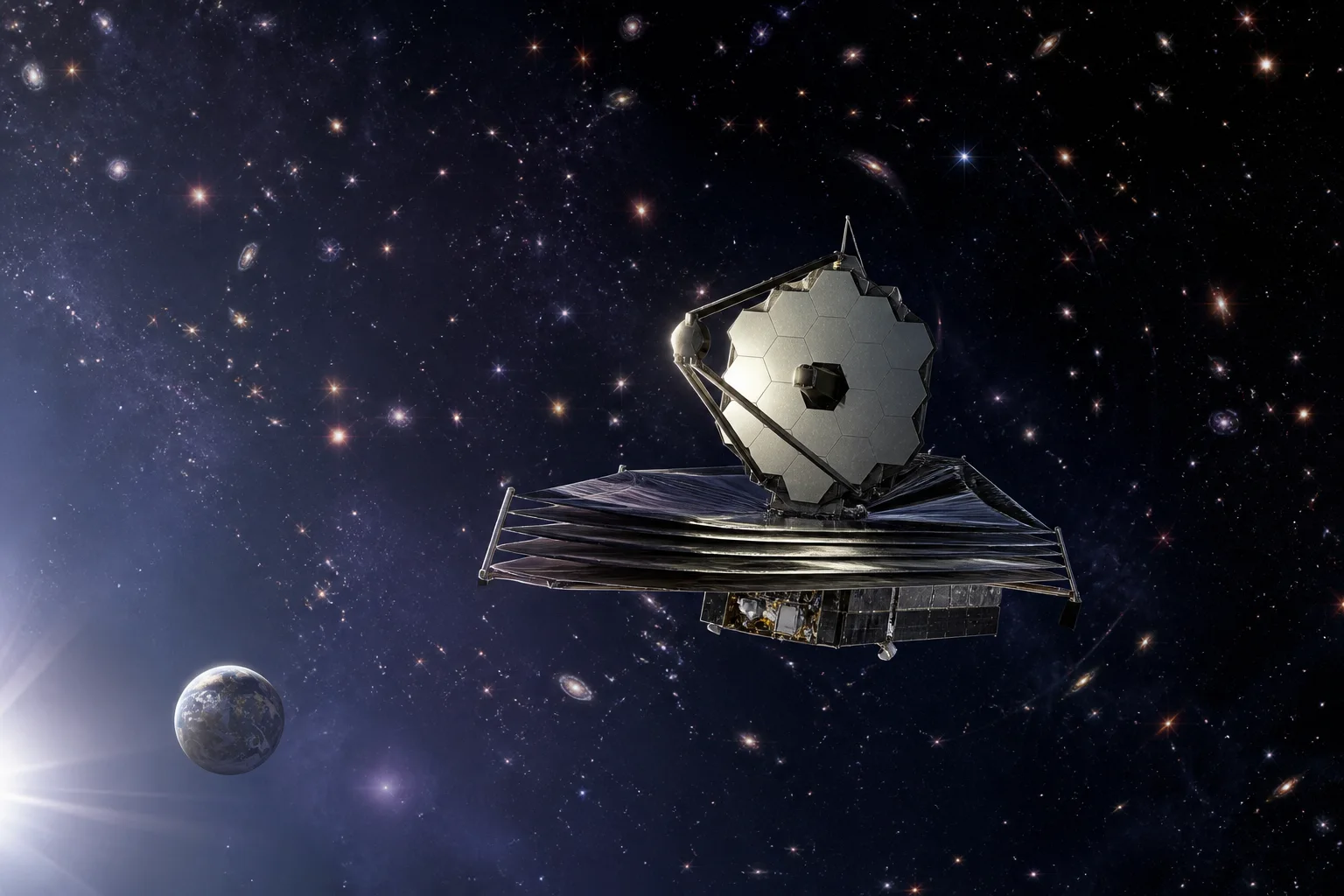
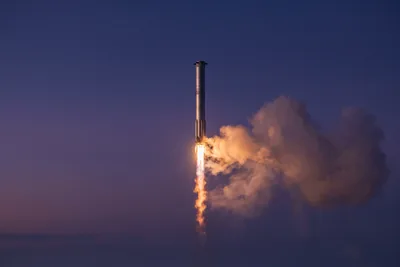
NASA’s Nancy Grace Roman Space Telescope is safely in flight, but the scientific mission has not started yet. A SpaceX Falcon Heavy lifted the observatory from Kennedy Space Center at 7:26 a.m. EDT on August 30, 2026. NASA’s control team received telemetry seven minutes later, and the spacecraft separated from the rocket 31 minutes after launch.
Those are confirmed milestones. Roman is now beginning a roughly three-month, one-million-mile journey toward the Sun–Earth L2 region. The next decisive work is quieter than launch: deploying, cooling, calibrating and proving that two complex instruments can deliver stable data. First images and survey results should not be treated as complete until NASA finishes commissioning.
What launched
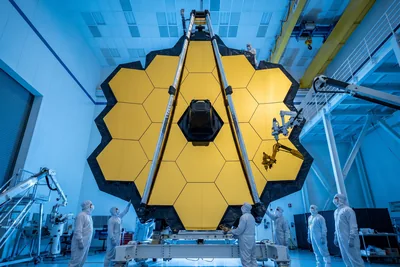
Roman is a wide-field infrared observatory built around a 2.4-metre primary mirror, the same diameter as Hubble’s. The similarity ends at the observing strategy. Hubble is exceptionally good at detailed views of small areas; Roman’s Wide Field Instrument is designed to capture a field more than 100 times larger in a single exposure.
That wide view is the core of the mission. Instead of selecting one galaxy or one exoplanet system at a time, Roman can repeatedly map large patches of sky. Astronomers expect the resulting catalogues to contain vast numbers of galaxies, supernovae, stars and planets. The promise is statistical power: rare objects become easier to find, and subtle patterns become measurable across very large samples.
Roman also carries a Coronagraph Instrument. It uses masks and deformable mirrors to suppress the glare of a star so that much fainter nearby planets can be imaged. NASA describes it as a technology demonstration, not the mission’s primary survey instrument. Its performance in space will inform later observatories designed to image potentially Earth-like worlds more directly.
Why dark energy needs a wide survey
Dark energy is the name given to whatever drives the accelerating expansion of the universe; it is not a photographed substance. Roman will attack the problem through several complementary measurements. It can map how galaxies are distributed, observe gravitational lensing caused by matter bending light, and record supernovae whose apparent brightness traces cosmic expansion.
Each method has different sources of error. Combining them matters because agreement can strengthen a result, while disagreement can expose calibration problems or incomplete physics. Roman will also overlap with the European Space Agency’s Euclid mission and the ground-based Vera C. Rubin Observatory. The missions are not duplicates: they cover different wavelengths, depths and survey patterns, allowing researchers to compare and combine datasets.
The launch does not confirm any new theory of dark energy. It puts the instrument in flight that may discriminate among models after years of observations and analysis.
The exoplanet mission is broader than direct images
Roman will search for planets mainly through gravitational microlensing. When a foreground star passes close to the line of sight to a more distant star, gravity magnifies the background light. A planet around the foreground star can add a brief, distinctive perturbation.
Microlensing is particularly useful for planets far from their stars and for free-floating planets that do not orbit a star. Those populations are difficult for transit surveys, which favour planets that repeatedly cross the face of a host star. Roman’s large, stable view toward the Milky Way’s crowded central region should turn microlensing from a sequence of individual discoveries into a population survey.
The coronagraph pursues a different goal: directly suppressing starlight to test high-contrast imaging technology on large planets. Roman is therefore not an “alien life detector.” It will measure planetary systems and advance the tools needed by future life-search missions.
What happens on the way to L2
L2 is not a parking spot where the spacecraft becomes motionless. Roman will operate in an orbit around the Sun–Earth L2 region, about 1.5 million kilometres from Earth, where the geometry helps keep the Sun, Earth and Moon on the same side of its protective orientation.
During cruise and commissioning, engineers must verify power, communications, thermal stability, pointing, detectors, optics and instrument calibration. Components that worked on Earth have to behave after launch vibration and in a cold vacuum. The team must also measure real optical imperfections so data-processing software can correct them.
This is why “launched successfully” and “science-ready” are separate statuses. The Falcon Heavy completed its role and telemetry arrived, but the mission only becomes scientifically productive after the observatory proves stable and repeatable.
Roman complements Webb rather than beating it
Comparisons such as “100 times Hubble’s field” are useful but easy to misuse. A wider view is not automatically sharper or deeper. Webb’s much larger mirror and specialised infrared instruments can study selected targets with extraordinary sensitivity. Roman is designed to find and map enormous samples, then help other facilities choose the most interesting objects for detailed follow-up.
Think of Roman as a surveyor and Webb as a forensic laboratory. Euclid and Rubin add other layers. Together they can find a transient event, measure its environment and return for spectroscopy or deeper imaging. The collaboration is more important than a simplistic telescope ranking.
What will count as success
The first success gate is technical: stable power, communications and deployment. The second is calibrated performance from the Wide Field Instrument and coronagraph. Only then come the scientific measures—survey area, image quality, cadence, data completeness and the control of systematic errors.
Roman’s headline discovery numbers are forecasts, not guaranteed counts. Weather cannot affect a telescope at L2, but detector artefacts, pointing constraints, data processing and the actual sky all shape the final catalogue. Results will also require independent teams to reproduce analyses from public data.
RoboFutur verdict
Roman’s launch is a major confirmed milestone. It sends a Hubble-sized mirror with a radically wider survey camera toward L2, creating a new bridge between all-sky discovery and the detailed work of Hubble, Webb, Euclid and Rubin.
The disciplined wording matters: Roman has launched; it has not yet measured dark energy or discovered its promised exoplanet population. The next three months will determine whether the observatory is ready. The years after that will show whether its greatest achievement is a planned survey—or one of the rare objects that only a very wide eye could notice.
✔ How we checked this
Verified on September 2, 2026 against NASA’s launch release and mission material, then cross-checked with Associated Press and Space.com launch reporting. Launch and telemetry are confirmed; science performance remains to be demonstrated after the three-month cruise and commissioning sequence.
Information verified as of the publication or update date shown. Technology moves fast — check the sources below.