Codex and antimicrobial research: candidates are not medicines
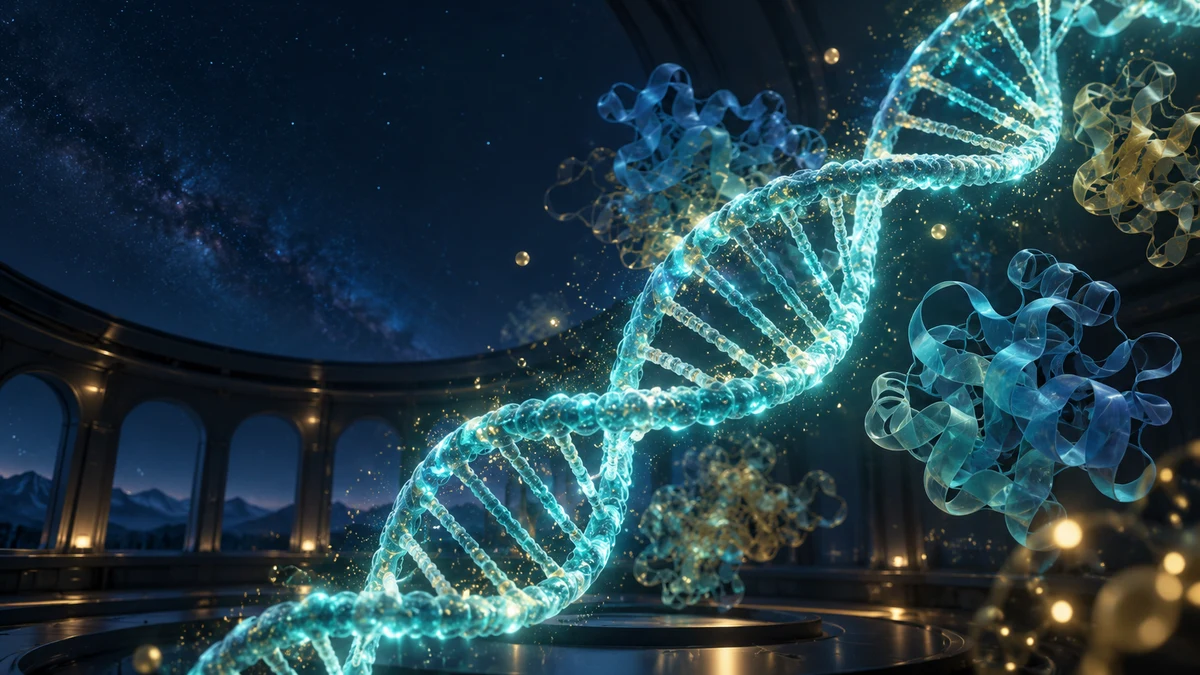
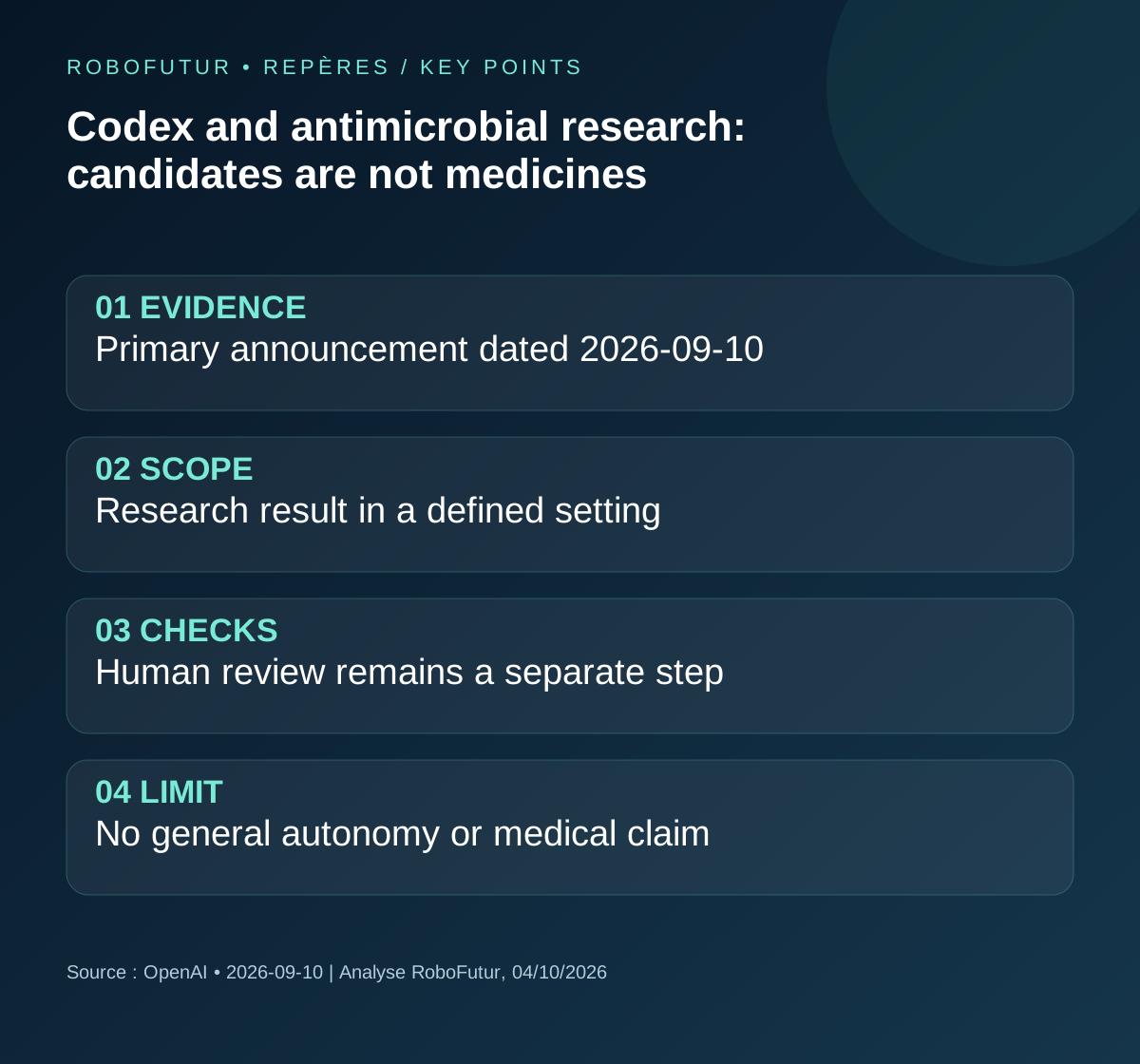
A 10 September 2026 OpenAI account describes César de la Fuente’s laboratory exploring genomic data for antimicrobial candidates. The team uses its own models alongside ChatGPT and Codex for hypotheses, code and analysis. This is a research-use account predating the past fortnight, not an approved antibiotic announcement.
Attribute the work correctly
Scientific workflows can combine specialised models, coding assistance and experiments. Readers should ask which component proposed candidates and which processed data. Attributing the entire result to a chatbot obscures the team’s work.
Candidates and treatments
Selecting a lead, measuring its activity and demonstrating safe use are separate tasks. Success at one step does not promise the next. A promising candidate and an effective treatment require different evidence.
Code quality is part of science
An analysis can fail if code confuses units, changes a filter or loses provenance. Versioned decisions and tests help make results interpretable. Coding assistance deserves the same traceability requirements as the rest of the project.
What can be reported
The subject is tool integration into a human laboratory. It does not establish a new OpenAI medical institution or treatment. Experimental publications and documented development milestones will guide our follow-up.
Continue reading: agents in a quantum laboratory and Claude-assisted enzyme research.
✔ How we checked this
Primary source checked on 4 October 2026; announcement dated 2026-09-10. No RoboFutur experiment; editorial interpretation kept distinct.
Information verified as of the publication or update date shown. Technology moves fast — check the sources below.