5 million robots in factories: the IFR publishes the real state of world robotics
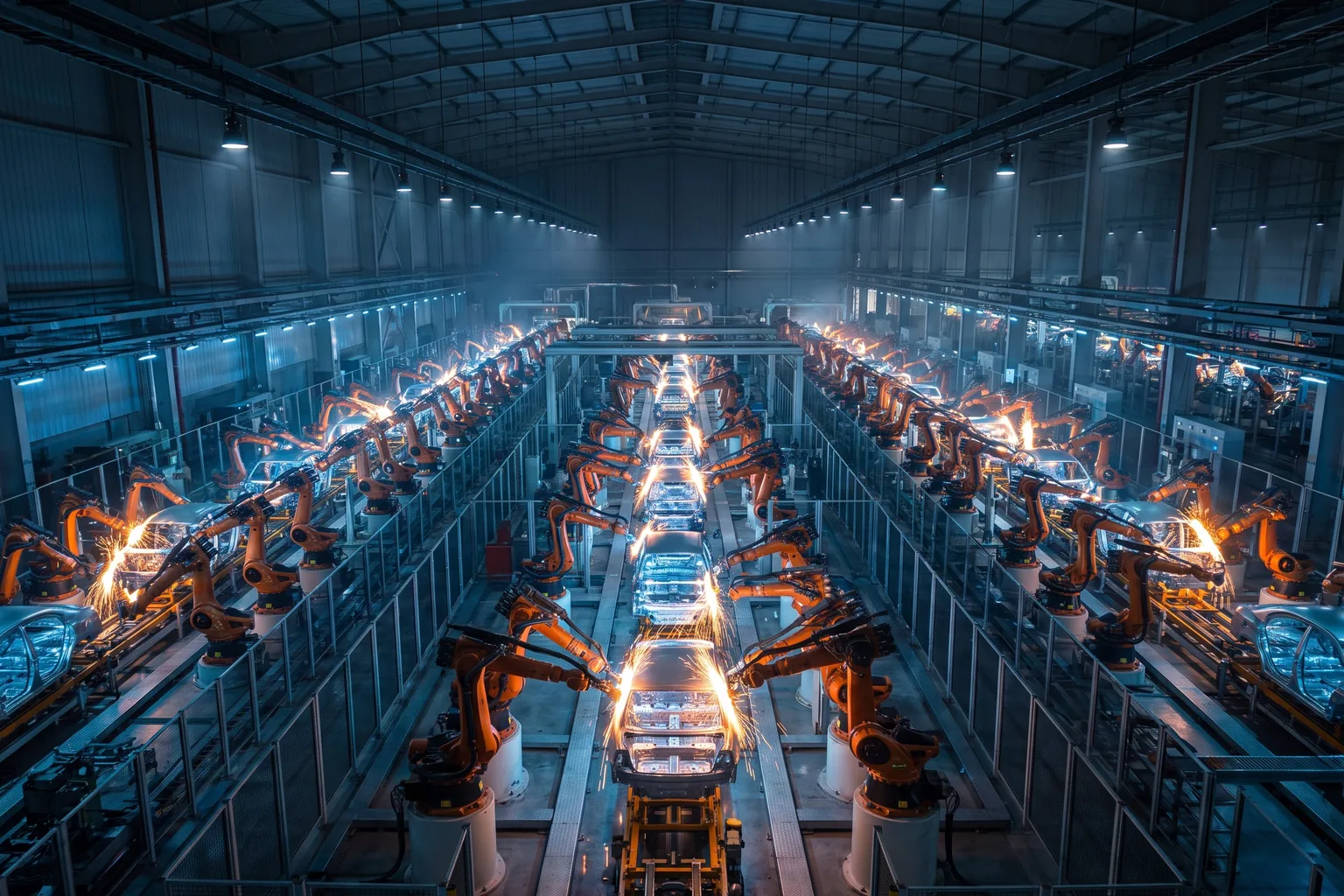
On 24 September 2026, the International Federation of Robotics (IFR) published its annual figures, covering the year 2025. The headline number is round and striking: a stock of 5 million industrial robots in operation worldwide, and more than 600,000 new installations in 2025 alone. That is growth of 9% for the installed base and 11% for installations.
These figures are useful precisely because they form the honest baseline against which everything said about humanoids should be measured. Here is what they say — and what they do not.
The scale itself is worth pausing on. Five million units in operation means the installed automation base of heavy industry worldwide is already enormous, and that the marginal robot added in 2025 joins a stock roughly twice the size of the one that existed seven years ago. This is a mature, industrial-scale sector that has been compounding quietly for two decades. The gap between that world and the humanoid conversation is where most of the confusion in public debate comes from.

The key numbers
| Indicator (2025) | Value | Change |
|---|---|---|
| Global stock in service | ~5,000,000 units | +9% |
| Installations during the year | >600,000 units | +11% |
| China — installations | 354,000 units | +20% |
| China's share of the world | 59% | annual record |
| Japan | 36,219 units | −19% |
| South Korea | ~30,000 units | −1% |
| India | ~10,500 units | +15% |
| Forecast for 2026 installations | 655,000 units | +9% |
| Forecast for 2029 installations | 806,000 units | — |
The real story is not China: it is Japan
The reflex is to read "China installs 354,000 robots, 59% of the world". That is true, and it is less interesting than the other number.
Japan fell 19%, dropping from second to third place worldwide, now behind the United States. The country that invented mass industrial robotics is retreating. This is not stagnation: it is a sharp fall.
The reading the IFR accepts is that of a reclassification of industrial property, with most automotive activity having moved elsewhere. But the effect is clear: a leading country can lose its position in two years.
The mechanism is straightforward, and it is a caution rather than an excuse. A robot installed in Japan is capital that stays in Japan, buying fixtures, integrating into tooling, and supporting local engineering work. When production moves abroad, the robots follow the production — and they arrive already depreciated in age but not in value, which suppresses new orders at home. Japan's number is therefore less a verdict on its engineers than an accounting consequence of where cars are now built.
The European surprise: France is slipping too
This is the number that matters most for a French readership. The IFR breaks it down as follows:
- Germany: 41% of European installations, but −8% to under 25,000 units;
- Italy: −11% to around 7,800 units;
- France: around 4,500 units, −8%, the third largest European market;
- Spain: around 4,300 units, −15%.
Industrial Europe is therefore in generalised decline, not just France. This is not an isolated French weakness: it is a continent deindustrialising the production of capital goods while Asia gains ground.
France's own decline deserves to be stated plainly rather than softened. At roughly 4,500 units a year, the third position in Europe and a fall of 8%, the country is losing ground at the same moment as its three largest European peers. The structural reason is the one the IFR points at for Japan: when assembly moves offshore, robot demand moves with it. A country that wants automation growth first has to keep the production.
What the forecasts imply
The IFR's own projections put 2026 installations at 655,000 units and 2029 at 806,000. Those are not dramatic numbers. They describe a sector growing at a high-single-digit to low-double-digit rate for four more years, which is the profile of a technology that has passed its speculative phase and settled into steady industrial replacement.
That trajectory is worth holding in mind whenever a humanoid announcement is measured against it. A sector adding 9% a year on a base of five million units is not a market waiting to be disrupted; it is a market that has already decided what a robot is for.
Where the Chinese figures need a caveat
One number deserves a methodological note: the share held by Chinese manufacturers in their own domestic market has fallen, from 57% in 2024 to 55% in 2025. In other words, even in its own dominant home market, China has opened up further to foreign suppliers. It is a sign that China's formidable production machine has not yet reached its own ceiling.
It is also a useful corrective to a lazy reading of the 59% figure. China's share is a share of a global total that is itself growing. Holding roughly the same domestic share while the world total expands means Chinese manufacturers are supplying more units in absolute terms than a year ago — a very different picture from one of retreat.
Why these numbers matter for the humanoid debate
Humanoids are the most heavily publicised subject in robotics. The IFR figures remind us of three things the debate readily forgets:
- The real installed base is 5 million units — and it is made up almost entirely of fixed-arm and cart-type robots, not humanoids. In volume, humanoids are a marginal and embryonic segment. A humanoid does not replace a welding cell; it competes for a task that does not yet have a well-served solution.
- The growth rate of the classical sector runs at 9 to 11% per year — not 432% (the figure you will see quoted for humanoids, but on a minuscule base). The two numbers are not comparable. A percentage measured against a few thousand units tells you almost nothing about a market measured against five million.
- The European market is shrinking at the same moment humanoid announcements multiply. That tension is worth keeping in mind. Announcing a humanoid pilot in a country that just cut its industrial robot installations by 8% is not evidence of a market forming.
For volume comparisons of humanoids, see our analysis of humanoid shipments. For what these installations look like on the ground, our reporting on China's dark factories and Amazon's robots in Indiana gives the shop-floor view; the file on humanoids in factories and safety covers the human side.
✔ How we checked this
Checked on 1 October 2026 against the official International Federation of Robotics press release of 24 September 2026 (Five Million Robots now Operate in Factories Globally), and its coverage by The Robot Report and Manufacturing Dive. Country installation figures are IFR figures for the year 2025.
Information verified as of the publication or update date shown. Technology moves fast — check the sources below.
Sources
- Five Million Robots now Operate in Factories Globally — International Federation of Robotics
- 5 Million Robots Now Working in Factories Worldwide, IFR Reports — The Robot Report
- Global robot density and installations trends — IFR